
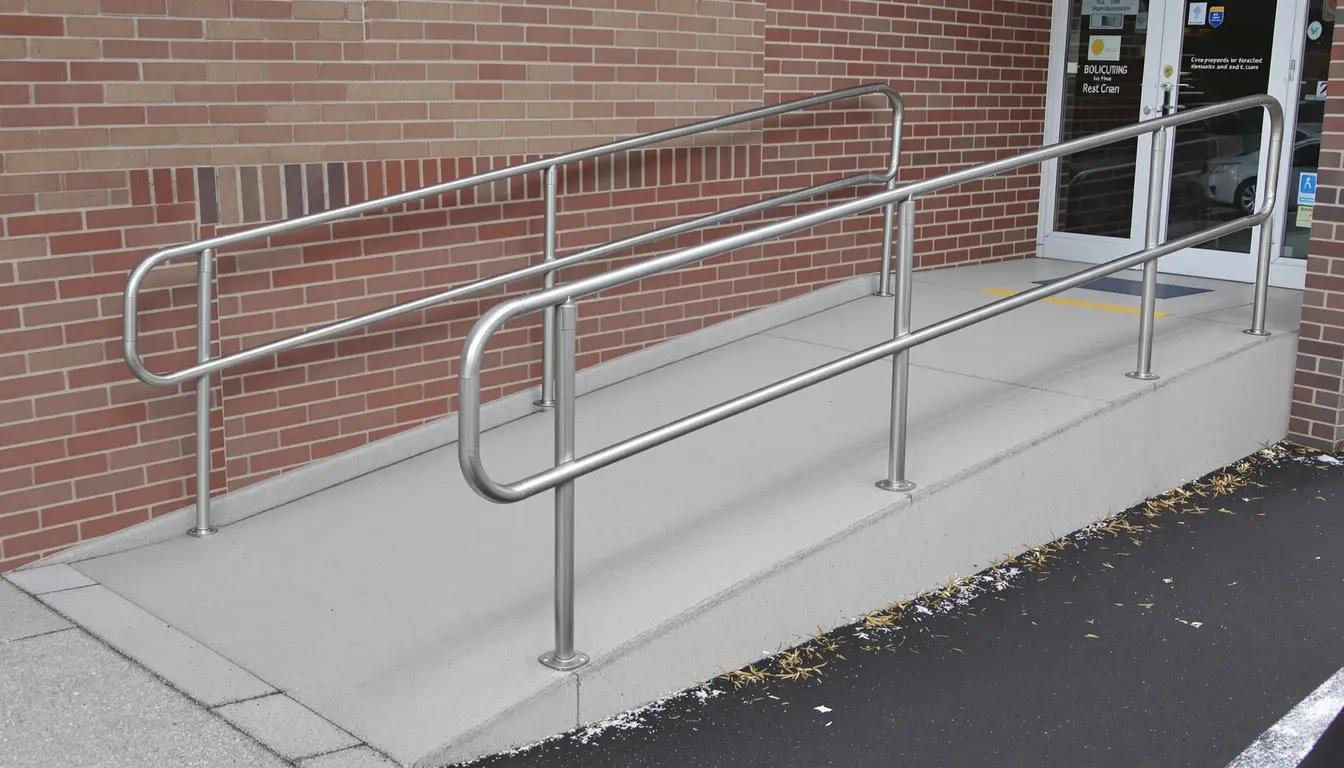
ADA Ramps & Compliance in Basehor, KS
Accessible ramps and curb ramps for Basehor, KS — the Gateway to Leavenworth County — built to the 1:12 slope, 36-inch width, and detectable-warning standards across the new Basehor Town Center and Wolf Creek retail, on upland loess that is firm until it gets wet.
ADA Ramps & Compliance in Basehor
ADA-compliant concrete ramp construction for commercial buildings, municipal facilities, and public spaces. Ford Concrete serves Basehor, KS and the entire Kansas City metro with more than a decade of experience and a 5-star reputation.
Basehor at a Glance
- Population
- 7,564
- State
- Kansas
- County
- Leavenworth County
- Schools
- Basehor-Linwood USD 458
What has to be true for an ADA ramp to pass in Basehor, KS?
An ADA ramp in Basehor passes when four numbers hold on the finished pour: the running slope at or under 1:12 max running slope, the cross slope under 1:48 max cross slope, the clear width at 36 inches or wider, and a level landing at each end. Those are the federal 2010 ADA Standards; a ramp on a public sidewalk or street corner also answers to PROWAG. None of it is guesswork — it is measured on the concrete, not assumed off the drawing.
Basehor is the newest commercial ground in Leavenworth County. The town has grown from a bedroom community into an upscale retail hub, and most of its retail — Basehor Town Center, Wolf Creek Marketplace, the outparcels filling the US-24/40 corridor — was poured from 2015 forward. That timing is the whole story here: the ramps going in now are a town’s first generation, and building them right while the pavement is young is far cheaper than retrofitting them later.
The newest retail in Leavenworth County — and the cheapest time to get its ramps right
New construction is the one place an accessible route can be built exactly to standard without fighting anything that already exists. On the fresh pads across Basehor Town Center and Wolf Creek, we set each curb ramp and its landings to grade the first time, tie the slope cleanly into the drive aisle, and embed the detectable warnings as the slab goes down. Built to design-slope-below-max, these ramps protect the original subbase investment and never come back as a retrofit line.
For an upscale corridor, compliance and appearance are not a trade-off — a ramp poured to a clean, consistent slope with flush warnings reads better than a patchwork of add-ons. That is the same standard we bring to parking lots and pads as a general contractor partner, and it carries to ramps in Lansing and Bonner Springs.
What loess does under a Basehor ramp
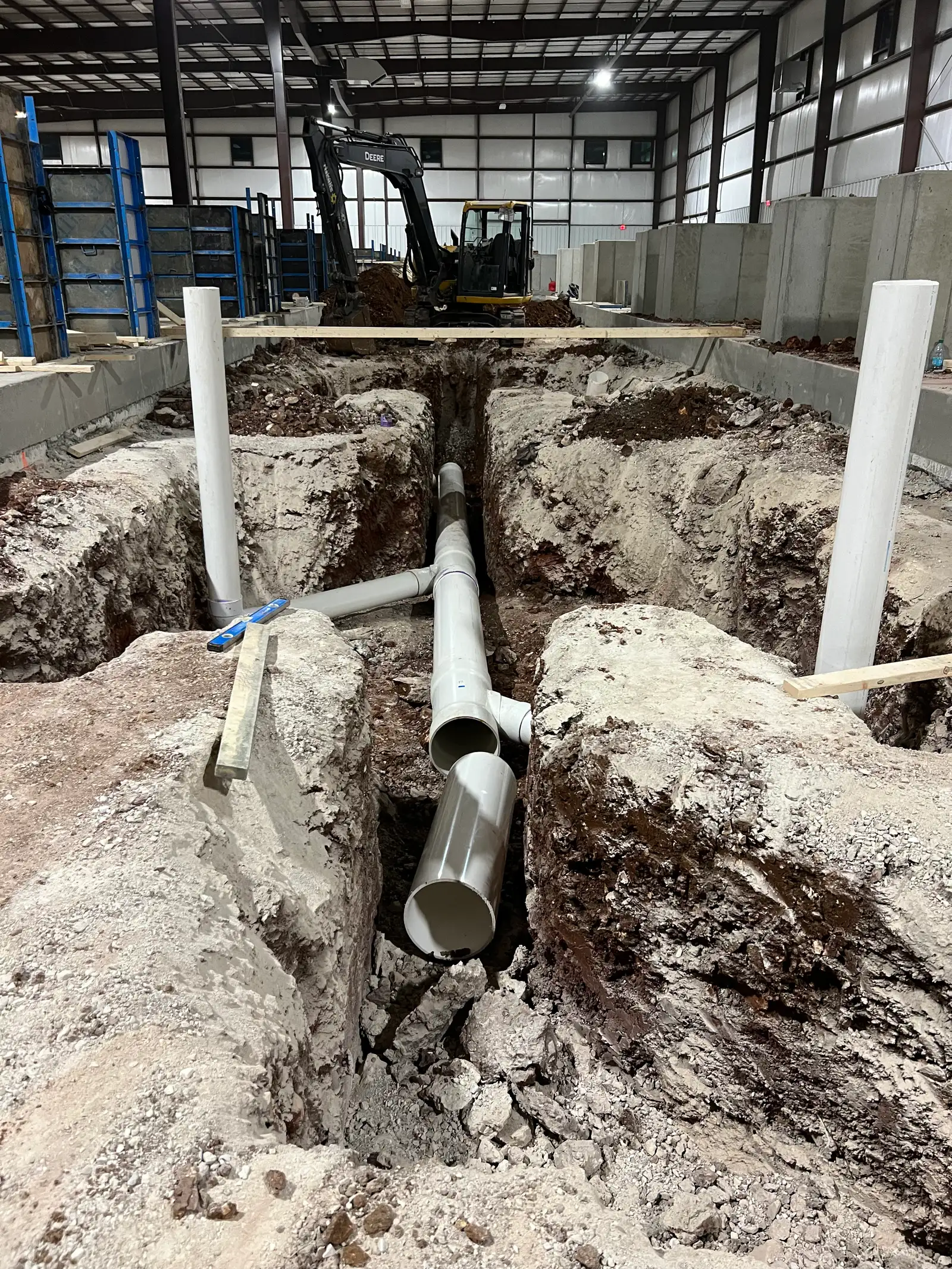
Basehor sits in the loess belt that runs down the Leavenworth corridor — wind-deposited silt that is firm and strong while it is dry and loses much of that strength the moment it saturates. On a fresh subbase, that matters: a landing compacted dry can settle if water gets in and softens the loess under it, and a settled landing is a non-compliant landing. So the ground work is half the job. We build up and compact the subgrade to the right moisture, pitch the surrounding grade to move water away from the ramp, and detail the grade break so runoff clears instead of pooling. Our storm drainage and soil guides go deeper on how this ground behaves.
Curb ramps and detectable warnings across the outparcels
Every point where a walk meets a street or drive aisle along US-24/40 needs a detectable warning — the field of truncated domes a cane and a foot both read as the edge of the safe path. On Basehor’s unshaded outparcel lots, glued-down panels bake, lift, and become a trip hazard within a couple of seasons. We set ours in the wet concrete so they are part of the slab, not an accessory bolted onto it. Where a ramp’s side drops off, we add edge protection so a wheel cannot roll off the run.
Accessible routes at the Town Center, Wolf Creek, and the schools
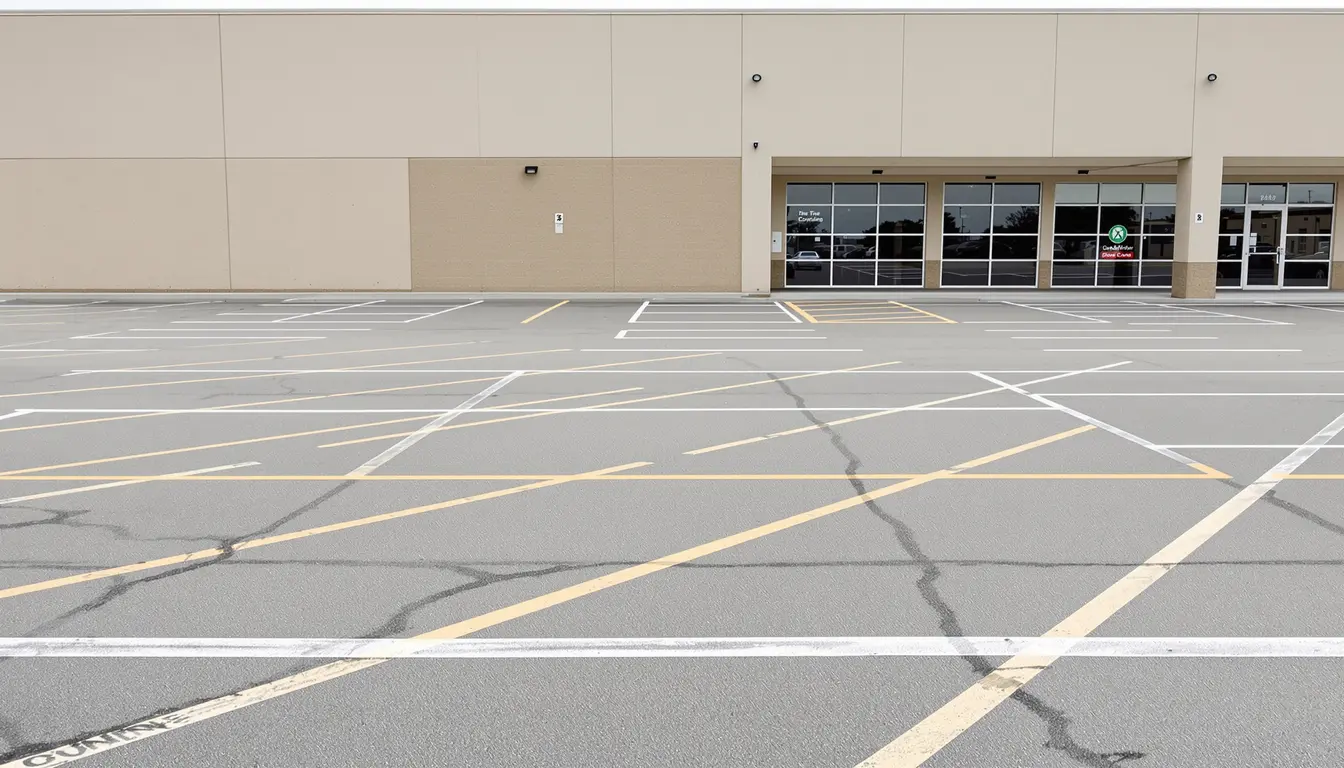
Compliance is a whole route, not a single corner. A shopper or a parent has to get from an accessible stall, across the drive aisle, up the ramp, and to the door along a continuous 36-inch clear width, without hitting a step or an over-steep pitch anywhere — and the same is true at the Basehor-Linwood schools, where student and event parking turns over hard. We map the route end to end, from the stall stripe to the entrance, and build every transition on it to the standard. That lot-to-door thinking is the same on a sidewalk run or a curb and gutter line.
Designed below the max, verified as-built
There is a difference between a ramp drawn at 1:12 and a ramp that reads 1:12 after the ground has moved under it. We design below the maximum on purpose, so a season of settlement in the loess still leaves the slope inside tolerance. Then we prove it: before we call a ramp done, we run as-built slope verification with a digital level across the running slope, the cross slope, and both landings, and we hand you the numbers. On a new corridor being inspected for the first time, that measured record is what turns an access review from a question into a formality.
Winter, de-icing salt, and staying compliant in Basehor
Leavenworth County winters put a ramp through repeated freeze-thaw and a season of de-icing salt, and both are hardest right at the grade break. We pour air-entrained 4,000 PSI concrete so the mix can take the freeze-thaw cycling, broom-finish the surface for grip when it is wet or iced, and saw-cut the joints to steer cracking away from the landings. Detailed for drainage and sealed against the salt, a Basehor ramp built this way holds its slope and its warnings for the long run. Ford Concrete is licensed, bonded and insured, and rates 4.9 on Google across 29 reviews for concrete work across the Kansas City metro.
New ramps across the Basehor retail corridor?
From call to concrete — the fastest in KC.
We build accessible curb ramps below the max as the retail goes in, handle the loess subgrade so nothing settles, and verify each slope with a digital level. Call (816) 721-1699 for a written estimate after a site visit, usually within 24 hours.
What goes into a Basehor ADA Ramps & Compliance job
Walk the route with the plan
We lay out each ramp with the GC where people actually walk, or shoot an existing route to find the misses.
Design below the max
We set running and cross slope under the limits so settlement in the loess has room before a ramp drifts out.
Build and compact the base
We build up the subgrade to the right moisture and pitch the grade so water moves away from the ramp.
Form landings and edges
We set level top and bottom landings, a clean grade break, and edge protection where the run drops off.
Pour and embed warnings
We place air-entrained 4,000 PSI concrete and set truncated-dome panels in the wet slab.
Verify as-built
We check the finished slopes and landings with a digital level and record the numbers.
Seal and hand off
We seal against de-icing salt and give you a measured record for the access file.
Is your Basehor ADA Ramps & Compliance failing?
New ramp already out of slope
Lifted detectable warning
Settled landing
No edge protection
Step at the grade break
Cross slope too steep
Why Ford for your Basehor ADA Ramps & Compliance
First generation, done right
We build Basehor's new retail ramps below-max the first time so they never drift out of compliance.
Loess handled at the base
We compact to the right moisture and pitch drainage away so a wet subgrade never settles the landing out of level.
Warnings set in wet concrete
Truncated-dome panels are embedded as the slab is poured, not glued to the surface to bake and lift on unshaded lots.
Proven with a level
We run as-built slope checks across the run, the cross slope, and both landings and hand you the numbers.
Proof we pour at any scale
From your driveway to an Amazon warehouse — the same crew, the same standards, every project.
Taco Bell
New Construction
Overland Park, KS
Domino's Pizza
New Construction
Independence, MO
Freddy's
New Construction
Kansas City
Tidal Wave Car Wash
New Construction
Kansas City
Amazon
New Construction
Riverside, MO
Nortian Food Grade Protein Facility
New Construction
Springfield, MO
Price your Basehor ADA Ramps & Compliance project
Or call us directly: (816) 721-1699
ADA Ramps & Compliance in Basehor — FAQs
What is the maximum slope for an ADA ramp?
Why does loess soil matter for a ramp in Basehor?
Do the detectable warnings hold up on unshaded retail lots?
Can you build the ramps as part of a new commercial build-out?
How do you prove a ramp is compliant?
Related concrete services in Basehor
Nearby Basehor-area projects
Start your Basehor concrete project
From call to concrete — the fastest in KC.
Get a free, no-obligation estimate for your concrete project. We serve the entire Kansas City metro — call (816) 721-1699 or request your estimate online.