Commercial Foundation Contractor in Kansas City, KS
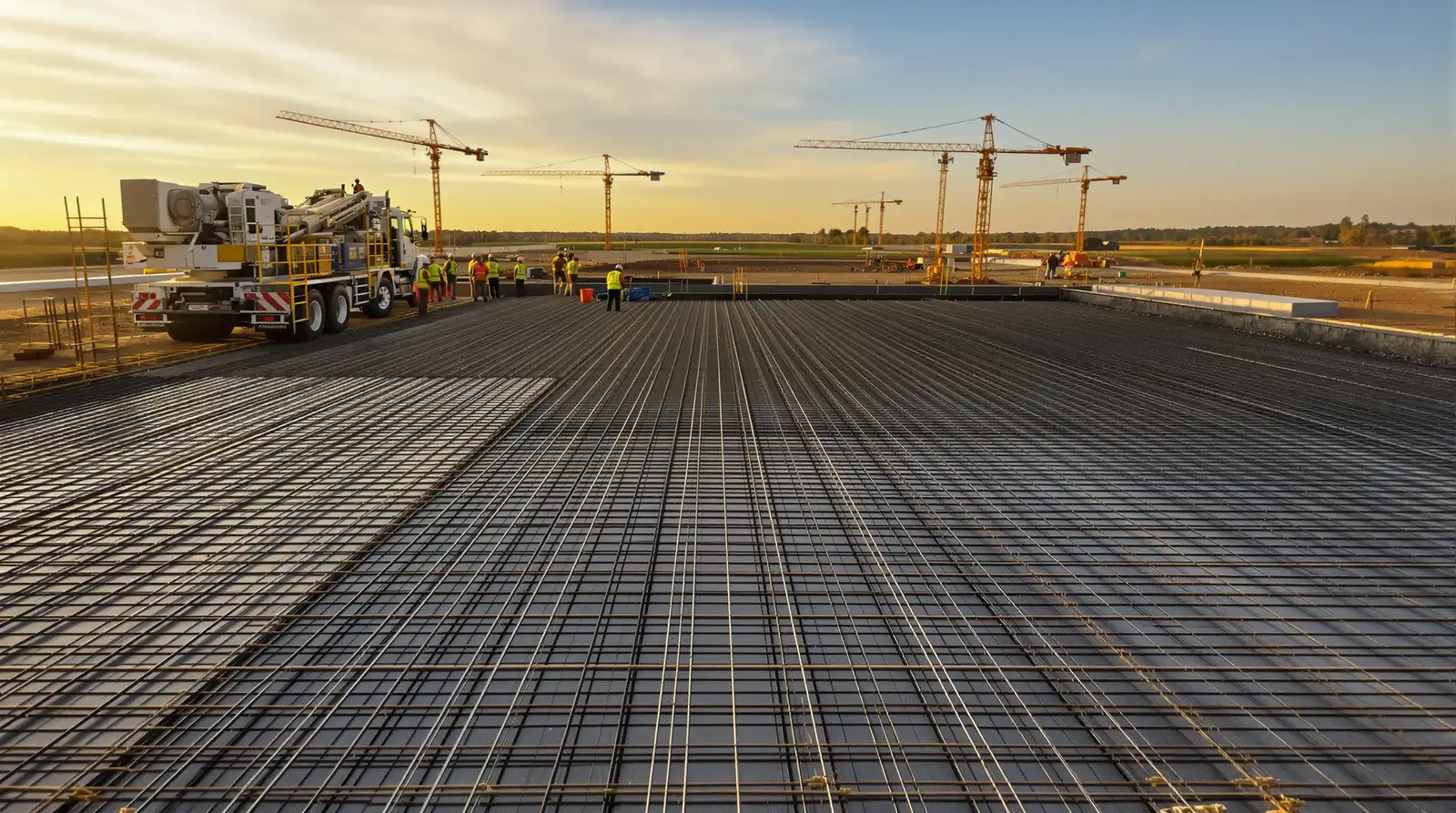
Deep foundations, spread footings, and dewatering-ready commercial foundation work on Kaw Valley alluvial soils — from Village West to the Fairfax industrial corridor, built by the crew that poured the Amazon warehouse in Riverside.
Get Your Free Estimate
★★★★★ 29 Five-Star Google Reviews
Commercial Foundations in Kansas City, KS
What's Being Built in Kansas City
Kansas City sits on Missouri and Kansas River alluvial soils along I-70, I-635, and the Kansas Avenue industrial corridor. The Village West entertainment and retail district, the Fairfax industrial area, the Argentine and Armourdale neighborhoods, and the growing commercial pipeline along State Avenue drive a mix of industrial, warehouse, retail, and entertainment foundation work. Every foundation on this ground carries water-table and alluvial-variability considerations that upland contractors miss — the soil profile can change in a few feet of horizontal distance, and the high water table forces dewatering on nearly every deep footing excavation.
Kansas City's alluvial soil is interbedded sand, silt, and clay deposited by the Missouri and Kansas River. Bearing capacity varies across the footprint — a sand lens may support a footing at 4 feet while an adjacent clay pocket requires 8 feet of depth. Groundwater frequently sits within 3 to 5 feet of finished grade. The confluence of the Missouri and Kansas Rivers makes KCK one of the most complex alluvial environments in the metro — the two rivers deposit different material, and the soil profile reflects both. We test-pit the footprint before bidding and plan the dewatering scope upfront so it is in the price, not a surprise.
Ford Concrete runs the river corridor regularly from our Independence yard. We poured the Amazon warehouse foundation in Riverside on the same type of alluvial ground, we handle dewatering, deep foundations, and floodplain coordination, and Aaron Ford walks every Kansas City site before writing a bid. One crew from excavation through finished concrete.
Foundation Challenges in Kansas City's Soil
Kansas City, Kansas sits on alluvial deposits from the Missouri and Kansas River confluence — one of the most complex soil environments in the metro. The Kaw Valley alluvium is interbedded sand, silt, and clay deposited by two rivers, with composition that changes in a few feet of horizontal distance. Bearing capacity varies across a single building footprint: a sand lens at 4 feet may provide adequate support while an adjacent clay pocket requires 8 feet of depth. The water table frequently sits within 3 to 5 feet of finished grade, forcing dewatering on nearly every deep footing excavation.
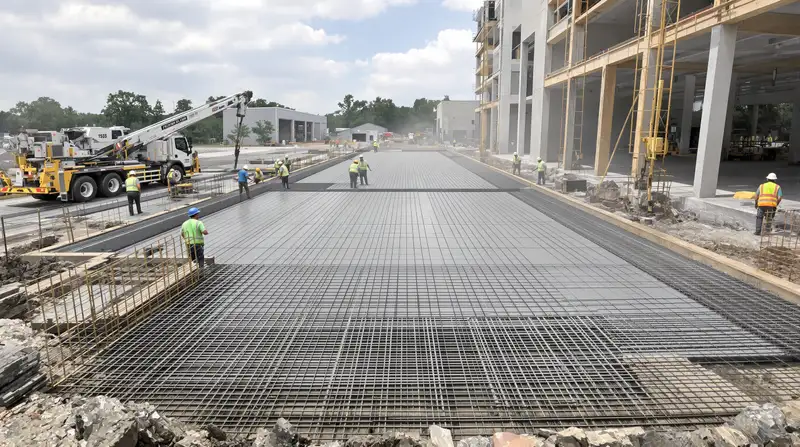
For large structures, mat foundations distribute loads across the full footprint rather than concentrating them at individual footings that may bear on inconsistent alluvial layers. Deep foundations with driven piling or drilled shafts bypass the alluvial material to reach bedrock. Spread footings work where the geotech confirms consistent bearing and dewatering is manageable. We test-pit the footprint, plan dewatering upfront, and price every soil remediation line item honestly. See our Kansas City soil conditions guide.
One Contractor — Excavation Through Flatwork in Kansas City
One contractor handles the full scope from excavation to finished concrete across Kansas City, Kansas. We handle dewatering, alluvial soil remediation, sitework, foundation forming and pouring, and the transition to slab-on-grade and flatwork — one crew, one bid, one accountable contact in Aaron Ford. We poured the Amazon warehouse foundation 10 minutes away in Riverside on the same type of alluvial ground, and that crew and equipment handles your KCK project. Floodplain coordination, dewatering, and Wyandotte County permitting are all handled in-house.
- ▶ Same crew from excavation through finished concrete
- ▶ Built the Amazon warehouse foundation in Riverside
- ▶ Dewatering and alluvial soil experience
- ▶ Floodplain coordination in-house
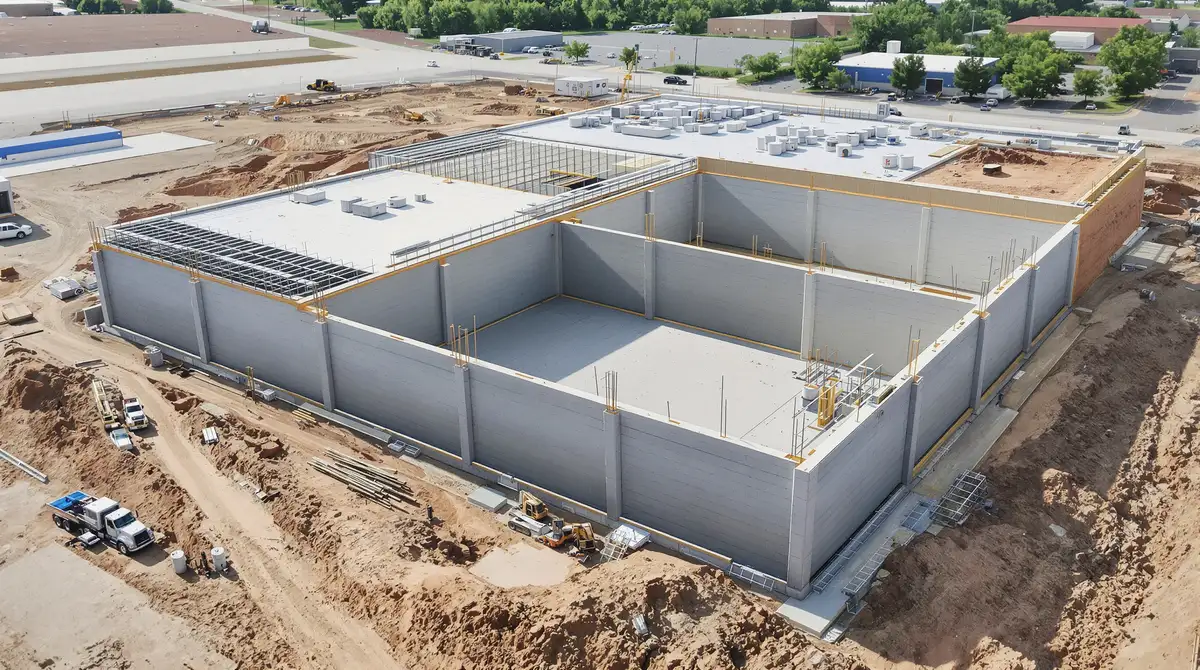
Foundation Services in Kansas City
Spread Footings & Continuous Footings
Isolated and continuous footings sized to structural loads, formed and poured to the bearing depth specified in the geotech report. The most common commercial foundation element in Kansas City. Learn more →
Grade Beam & Pier Systems
Reinforced grade beams spanning between drilled piers to bypass unstable surface soils. Void forms protect against clay uplift in Johnson County. Learn more →
Mat Foundations
Single continuous slabs distributing loads across the full building footprint. We poured the Amazon warehouse mat foundation in Riverside — continuous placement, thermal monitoring, zero cold joints. Learn more →
Foundation Walls & Below-Grade Work
Poured-in-place foundation walls with snap-tie forming systems, waterproofing membrane, and drainage board. Stem walls, basement walls, and retaining walls handled by the same crew. Learn more →
Equipment Pads & Specialty Foundations
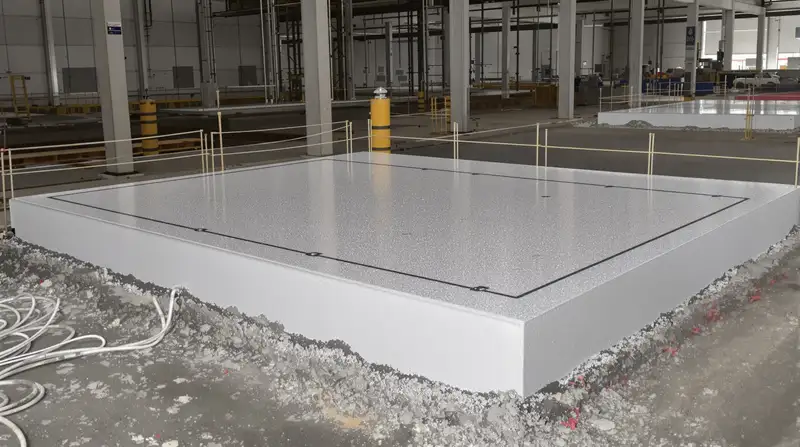
Machine foundations with vibration isolation, anchor bolt templates, elevator pits, loading dock pits, and embedded conduit — precision work where tolerances are measured in sixteenths of an inch. Learn more →
How Much Does a Commercial Foundation Cost in Kansas City?
Kansas City, Kansas straddles two distinct soil zones that directly affect foundation pricing. Sites in the Kansas River bottomland — from the Argentine district through the Fairfax industrial corridor — sit on alluvial sand-silt-clay deposits with variable bearing capacity and a high water table that may require dewatering during excavation. Upland sites along Parallel Parkway and the Village West area sit on loess-clay with better bearing but higher shrink-swell behavior. Alluvial-zone projects carry dewatering and over-excavation costs that upland sites avoid, while upland clay sites require deeper footings and moisture-controlled compaction. KCK's industrial and mixed-use zoning means foundation scopes range from heavy warehouse mat slabs in the Fairfax corridor to conventional spread-footing pads for QSR and retail along State Avenue. Aaron walks every KCK site to distinguish bottomland from upland pricing before writing a number.
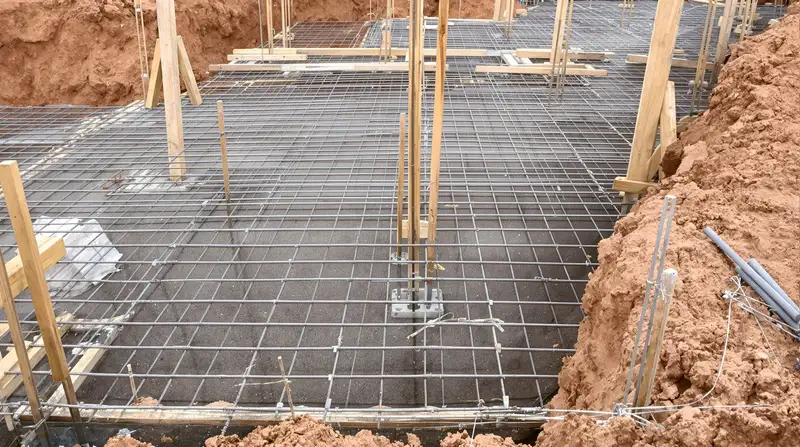
Which Foundation Type for Your Kansas City Project?
| Your Project | Recommended Foundation | Why |
|---|---|---|
| Single-story retail / restaurant | Spread footings + slab-on-grade | Standard, cost-effective, proven on KC clay |
| Warehouse / distribution | Mat foundation or spread footings | Heavy rack and equipment loads need distribution |
| Multi-story office / medical | Grade beams on piers | Bypasses unstable surface clay for deep bearing |
| Equipment-heavy industrial | Specialty equipment pads | Precision embeds, vibration isolation, load-specific |
| Below-grade / basement | Foundation walls + waterproofing | Full below-grade envelope with moisture protection |
KCK commercial construction spans heavy industrial warehouse slabs in the Fairfax and Argentine corridors, QSR and retail pads along State Avenue and Parallel Parkway, and entertainment-district projects near Village West. Warehouse and distribution facilities on alluvial bottomland typically require mat foundations or grade beams on drilled piers to handle variable bearing and potential settlement. Retail and QSR pads on upland loess-clay use conventional spread footings with over-excavation where the proof roll identifies soft zones. Aaron reviews the geotech boring logs to match foundation type to the specific KCK soil zone — bottomland alluvial and upland loess produce fundamentally different foundation designs.
Geotech Requirements in Kansas City
KCK sits at the confluence of the Kansas and Missouri Rivers, producing two sharply different soil profiles within city limits. Bottomland sites — Fairfax, Argentine, Central Avenue industrial — encounter alluvial deposits of variable sand, silt, and clay with a seasonal water table as shallow as 4 to 6 feet. Upland sites along Parallel Parkway and the western corridors sit on loess bluffs with moderate-to-high plasticity clay. Kansas Department of Health and Environment (KDHE) stormwater permits and floodplain compliance apply to all commercial grading in the bottomland zones. The geotech investigation determines whether dewatering, deep foundations, or standard spread footings are appropriate.
Foundation Repair vs. New Construction in Kansas City
Kansas City, Kansas has some of the oldest commercial building stock on the Kansas side of the metro. Downtown KCK along Minnesota Avenue and Kansas Avenue includes pre-war commercial structures from the 1920s through the 1950s sitting on original unreinforced concrete or limestone rubble footings that have deteriorated through decades of alluvial-zone moisture cycles. The Argentine and Armourdale districts carry post-war industrial buildings from the 1940s through the 1960s with slab-on-grade foundations showing settlement and joint failure from repeated flood events. Foundation evaluation on older KCK commercial buildings requires determining whether the existing footings can support renovation loads or whether full replacement is the safer path.
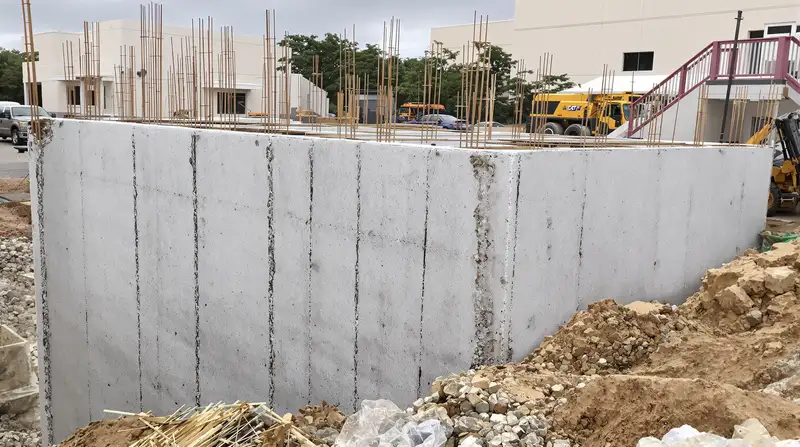
Commercial Construction in Kansas City
KCK commercial construction activity concentrates in three distinct zones. The Village West and Legends area near I-435 and State Avenue generates entertainment, hospitality, and retail pad work — the highest-profile commercial corridor on the Kansas side. The Kansas Avenue industrial corridor from downtown through the Fairfax district produces warehouse, distribution, and manufacturing facility foundation work, including heavy mat slabs for logistics operations. Parallel Parkway from I-435 west to the county line carries steady QSR, retail, and medical office development. The Turner Diagonal industrial corridor adds periodic warehouse and flex-space projects. KCK's Unified Government permitting process differs from Johnson County municipalities, and we know how to navigate it.
Commercial Foundation FAQs — Kansas City, KS
How much does a commercial foundation cost in Kansas City, KS?
Commercial foundation costs in Kansas City depend on foundation type, soil conditions, structural loads, and dewatering scope and the variability of alluvial bearing conditions across the footprint. Every project gets a detailed line-item bid based on the structural drawings and geotech report. Call (816) 721-1699 for a site visit and bid.
What soil conditions affect foundations in Wyandotte County?
Wyandotte County is dominated by Missouri and Kansas River alluvial deposits — interbedded sand, silt, and clay with a high water table across most of the Kaw Valley. Alluvial layers change composition in a few feet of horizontal distance, and the high water table forces dewatering on nearly every deep footing excavation. Over-excavation, structural fill, and proof rolling are standard mitigation measures on commercial pads.
What foundation type is best for Kansas City's alluvial soil?
It depends on the building loads and site-specific geotech data. Mat foundations distribute loads across the full footprint on variable alluvial ground. Deep foundations with driven piling or drilled shafts bypass alluvial material to reach bedrock. Spread footings work where bearing is consistent and dewatering is manageable. We review the geotech and structural drawings to determine the right system for each Kansas City site.
What equipment pad foundations do you pour in Kansas City?
We pour machine foundations with vibration isolation, equipment pads with embedded anchor bolt templates, loading dock pits, and elevator pits. Anchor bolt templates are precision-set to hold J-bolts or L-bolts in their exact engineered positions — if the template shifts during the pour, the equipment does not bolt down.
How does Kansas City's alluvial soil affect foundation design?
Kansas City, Kansas sits on alluvial deposits from the Missouri and Kansas River confluence. Bearing capacity varies across a single footprint, the water table sits within a few feet of grade, and dewatering is required on nearly every deep excavation. Foundation design is site-specific and driven by the geotech boring log. The geotech report is the starting point for every foundation design decision in Kansas City — we review it, test-pit where needed, and price the soil remediation honestly.
What makes Ford Concrete different from other foundation contractors in Kansas City?
We control the entire sequence from raw excavation to finished concrete — one crew, one bid, one accountable contact in Aaron Ford. We built Amazon warehouse foundation in Riverside with this model. Most foundation contractors hand the sitework to someone else and show up after the hole is dug. We dig the hole, pour the foundation, and keep going into slab-on-grade and flatwork.
Ready to Pour Your Foundation in Kansas City?
From excavation to finished concrete — we handle commercial foundations in Kansas City end-to-end. Call (816) 721-1699 or request your free bid online.