Concrete Repair in Kansas City, KS
Concrete repair for Wyandotte County — from the Argentine bottoms to the Strawberry Hill bluffs
Concrete Repair in Kansas City
Concrete crack repair, spalling repair, joint sealing, and structural restoration for all concrete surfaces. Ford Concrete serves Kansas City, KS and the entire Kansas City metro with more than a decade of experience and a 5-star reputation.
Kansas City at a Glance
- Population
- 156,977
- State
- Kansas
- County
- Wyandotte County
- Schools
- Kansas City, Kansas Public Schools (USD 500)
Can your Kansas City concrete be repaired, or does it need replacing?
Most concrete in Kansas City, KS is worth repairing when the slab is structurally sound and the crack has stopped moving; it needs replacing when the ground under it has failed. We sound the slab, read the crack, and probe the base before quoting — because on the Kaw bottoms the real problem is almost always underneath.
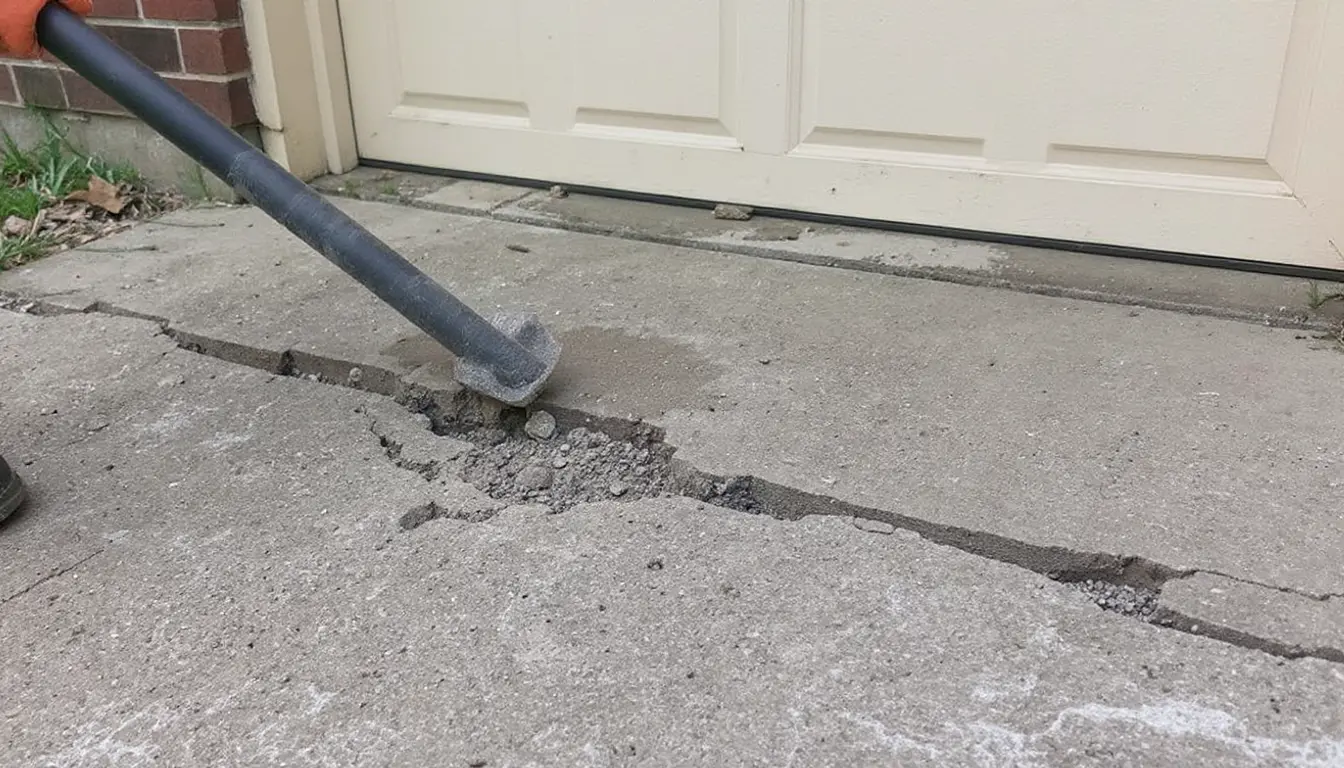
That call is the entire job. A tight shrinkage crack in a Piper slab is a patch. A driveway in Armourdale that dropped an inch because river-bottom fill consolidated is a base failure no surface repair will hold. We start by sounding the concrete for the hollow ring of delamination and checking the edges for voids. If the slab is past saving, we say so and point you toward full replacement instead of selling you a patch that fails by spring.
Active or dormant? How we read a Wyandotte County crack
Before anything gets filled, we decide whether a crack is active — still opening and closing with moisture and temperature — or dormant. It changes the repair completely. A dormant crack takes a rigid structural fill that restores load transfer across the break. An active crack over moving river-bottom clay needs a flexible sealant and a joint that lets the slab keep moving, or it simply cracks again beside the patch.
We also separate surface cracking from structural cracking. Map-pattern crazing on a Strawberry Hill walk is cosmetic. A single crack running corner to corner, with the two sides at different heights, means the slab has lost support and is a candidate for removal and repour, not injection.
Why slabs sink in Armourdale, Argentine, and the Kaw bottoms
Kansas City, KS sits on two grounds. The Argentine and Armourdale bottoms and Kaw Point are river alluvium with a high water table, where uncompacted fill keeps settling for years and washes out into voids beneath the slab. Strawberry Hill and Quindaro ride firmer upland bluffs that move less. A repair that ignores which ground you are on is guesswork.
When a slab has sunk over a void, filling the crack does nothing — the support is gone. We dig a test hole at the edge, confirm what the substrate is doing, and rebuild the base with compacted granular material before any concrete goes back. The soil story behind all of this is in our Kansas City soil guide.
Partial-depth vs full-depth: how the repair is actually done
A repair only lasts if it bonds. For a spalled or delaminated area that has not reached the reinforcement, we saw a clean perimeter and do a partial-depth repair — no thin feather-edge, which always breaks off. When damage goes through the slab or exposes steel, it becomes a full-depth repair: cut out the full section, restore load transfer, and pour back at 4,000 PSI.
The prep decides the outcome. We abrade the old concrete to a sound ICRI CSP profile, remove laitance, and bring the surface to a saturated surface-dry condition so the new material grabs. On commercial work we verify the bond with a pull-off test rather than guessing. Skip that and you get a patch that pops out in a season — the reason so many DIY repairs in KCK fail.
Spalling and scaling after a Kansas City winter
Winters here run concrete through repeated freeze and thaw, and the damage shows first as scaling — the top surface flaking off — then spalling at joints and edges where deicing salt collected. Left alone, water reaches the reinforcement, corrosion starts, and the rust wedges the slab apart from the inside.
The repair depends on depth. Shallow scaling on a sound slab takes a bonded resurfacing overlay. Spalling with exposed reinforcement means removing concrete to sound material behind the steel, cleaning the corrosion, and rebuilding — you cannot patch over rusting rebar and expect it to hold.
Industrial slab and truck-lane repair near I-70 and the BNSF yards
KCK is a working city — GM, BNSF, Amazon, and the freight lanes off I-70 and K-32 put loads on concrete that residential slabs never see. That means joint scaling on scale pads, structural rutting in heavy-truck lanes, and blown-out control joints on dock aprons. Those are repairable, but only with the right load-transfer detail restored at the joint.
The same crew that repairs a dock joint pours residential drives, and the commercial discipline carries over. See the range of that work on our commercial concrete page and the finished results in the project gallery.
What concrete repair costs in KCK — and when it is worth it
We do not quote repair from the curb, because the price tracks the cause, not the crack length. A joint reseal is inexpensive; a full-depth section with new base and restored load transfer costs more but buys years. The honest math: once a slab has three or more full-depth failures, replacement usually costs less over a decade than chasing patches.
You get a written number after we sound the slab and check the base — not a guess. Permits for structural work run through the Unified Government of Wyandotte County; the details are in our permits guide. Kansas City, KS property owners rate Ford 4.9 stars across 29 reviews for exactly this kind of straight answer.
Cracked, spalling, or sinking concrete in Kansas City, KS?
From call to concrete — the fastest in KC.
On the Kaw bottoms the fix depends on what the ground is doing, and that takes a real look — not a phone quote. We sound the slab, check the base, and hand you a written repair-or-replace answer, usually within 24 hours. Call (816) 721-1699.
How we build Concrete Repair that lasts in Kansas City
Sound the slab and read the ground
We tap for delamination, classify each crack as active or dormant, and probe the edges for voids. In the KCK bottoms the cause is usually in the base.
Cut out to sound concrete
Failed material is saw-cut to a clean perimeter and removed to sound substrate — no feather-edges, no patching over rust.
Prep the substrate for bond
We abrade to a sound ICRI surface profile, strip laitance, and bring the concrete to saturated surface-dry so the repair actually grabs.
Place, restore load transfer, and cure
We pour back at 4,000 PSI, restore load transfer across full-depth joints, and cure the repair so it holds through the next freeze-thaw season.
When Concrete Repair in Kansas City is ready to replace
Cracks at different heights
When the two sides of a crack sit at different elevations, the slab has lost support underneath — a base problem, not a surface one.
Hollow-sounding patches
A dull, hollow ring when you tap the surface is delamination: the top layer has separated and will flake away.
Flaking and edge spalling
Surface scaling and spalling at joints after a salted winter is freeze-thaw damage working down from the top.
Rust staining and exposed steel
Brown staining or visible rebar means corrosion is underway and the concrete around it needs removal, not a skim patch.
One corner dropping
A settling corner on the Kaw bottoms usually means a void has opened as river-bottom fill consolidated beneath the slab.
Why Ford for your Kansas City Concrete Repair
We diagnose before we quote
Every visit starts by sounding the slab and probing the base. You get a repair-or-replace answer based on what the concrete and the ground are doing — not a number pulled from the curb.
We know the Wyandotte bottoms
The Argentine and Armourdale bottoms sit on river alluvium that keeps settling; Strawberry Hill rides firmer bluff. We repair to the ground you are actually on.
Commercial-grade prep on every patch
Sound substrate profile, laitance removed, saturated surface-dry, verified bond. The prep that makes an industrial dock repair hold is the prep we give a driveway patch.
Straight talk on repair vs replace
If a patch will not hold, we tell you. Rated 4.9 stars across 29 reviews for honest calls on what is worth fixing.
Where our Concrete Repair crews have delivered
From your driveway to an Amazon warehouse — the same crew, the same standards, every project.
Taco Bell
New Construction
Overland Park, KS
Domino's Pizza
New Construction
Independence, MO
Freddy's
New Construction
Kansas City
Tidal Wave Car Wash
New Construction
Kansas City
Amazon
New Construction
Riverside, MO
Nortian Food Grade Protein Facility
New Construction
Springfield, MO
Get your free Concrete Repair estimate in Kansas City
Or call us directly: (816) 721-1699
Concrete Repair in Kansas City — FAQs
How do I know if my concrete can be repaired or needs replacing?
Why does my repaired crack keep coming back?
Can you fix concrete that is flaking and spalling after winter?
My driveway corner has sunk. Can it be lifted?
Do I need a permit to repair concrete in Kansas City, KS?
How long will a concrete repair last?
Other concrete work we do in Kansas City
Concrete Repair across the Wyandotte County area
Ready to pour in Kansas City?
From call to concrete — the fastest in KC.
Get a free, no-obligation estimate for your concrete project. We serve the entire Kansas City metro — call (816) 721-1699 or request your estimate online.