
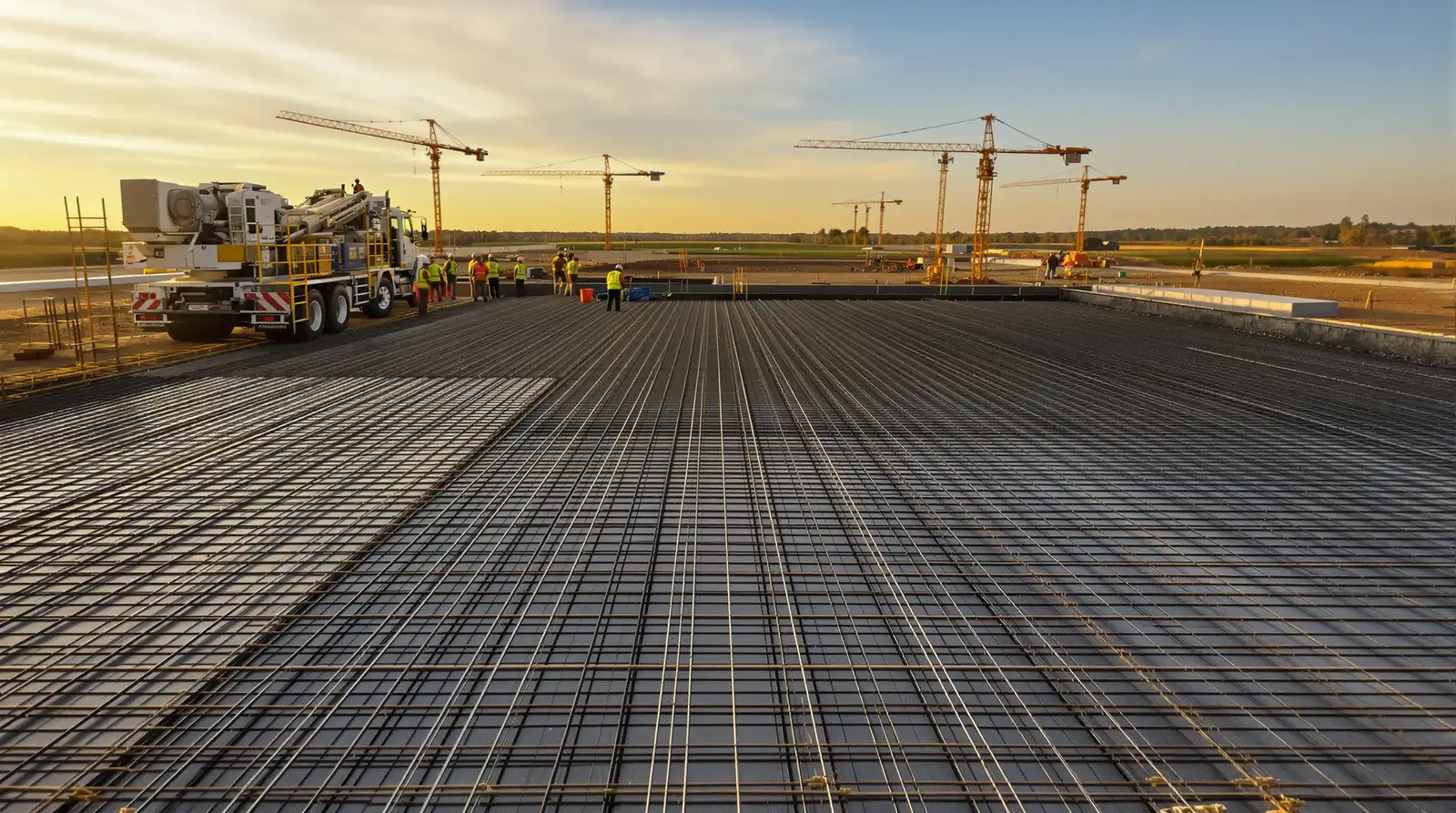
Commercial Foundation Contractor in Lexington, MO
Site-specific foundations on Lafayette County alluvial soils along the Missouri River and the historic downtown corridor — dewatering, deep footings, and honest mobilization from the crew that poured the Domino's in Independence.
Get Your Free Estimate
★★★★★ 29 Five-Star Google Reviews
Commercial Foundations in Lexington, MO
What's Being Built in Lexington
Lexington sits on the Missouri River in Lafayette County — about 40 minutes east of Independence. The commercial construction market here is smaller than the KC metro core, but the historic downtown, the agricultural economy, and the incremental development along MO-13 and MO-24 generate steady demand for foundations: small commercial buildings, agricultural-commercial structures, downtown renovations, and residential projects. The Missouri River defines the foundation engineering — bottomland sites face alluvial soil and high water tables, while bluff-top sites deal with residual clay.
Lexington's alluvial bottomlands carry interbedded sand, silt, and clay deposited by the Missouri River. Bearing capacity varies across a single footprint, and the high water table may force dewatering on deep footing excavations. Bluff-top sites sit on residual clay with standard shrink-swell characteristics. The historic downtown adds the challenge of working adjacent to 19th-century structures. Every Lexington project is site-specific — the geotech investigation determines everything.
Ford Concrete serves Lexington from our Independence yard. We poured the Domino's Pizza foundation in Independence, we handle Lafayette County permitting, and Aaron Ford walks every Lexington site before writing a bid. We price the eastern-corridor mobilization honestly.
Foundation Challenges in Lexington's Soil
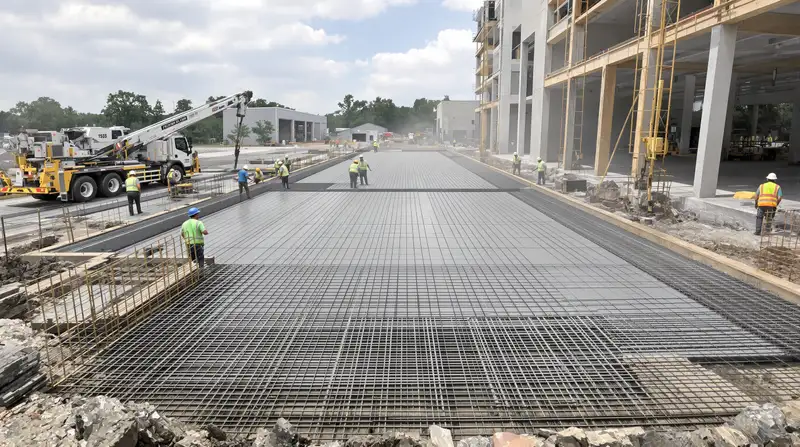
Lexington sits on the Missouri River in Lafayette County — and the river defines the foundation engineering. Bottomland sites near the river sit on alluvial deposits: interbedded sand, silt, and clay with a high water table that may sit within a few feet of grade. Bearing capacity varies across the footprint, and dewatering is a real possibility on deep footing excavations. Bluff-top sites above the river sit on residual clay with standard shrink-swell characteristics.
Lexington's historic downtown adds the challenge of working adjacent to existing 19th-century structures with unknown foundation conditions. Any new foundation near a historic building must account for the adjacent structure's stability during excavation. Over-excavation, dewatering, and site-specific foundation design are the standard approach. See our Kansas City soil conditions guide.
One Contractor — Excavation Through Flatwork in Lexington
One contractor handles the full scope from excavation to finished concrete in Lexington. Whether the pad is on the Missouri River bottomland or on the bluffs above, we handle sitework, dewatering, excavation, foundation forming and pouring, and the transition to slab-on-grade and flatwork — one crew, one bid, one accountable contact. We poured the Domino's foundation in Independence and handle alluvial and clay soil profiles across the KC metro. Aaron Ford walks every Lexington site before a bid goes out.
- ▶ Same crew from excavation through finished concrete
- ▶ Built the Domino's Pizza foundation in Independence
- ▶ Dewatering and alluvial soil experience
- ▶ Honest mobilization pricing
Foundation Services in Lexington
Spread Footings & Continuous Footings
Isolated and continuous footings sized to structural loads, formed and poured to the bearing depth specified in the geotech report. The most common commercial foundation element in Lexington. Learn more →
Grade Beam & Pier Systems
Reinforced grade beams spanning between drilled piers to bypass unstable surface soils. Void forms protect against clay uplift in Jackson County. Learn more →
Mat Foundations
Single continuous slabs distributing loads across the full building footprint. We poured the Amazon warehouse mat foundation in Riverside — continuous placement, thermal monitoring, zero cold joints. Learn more →
Foundation Walls & Below-Grade Work
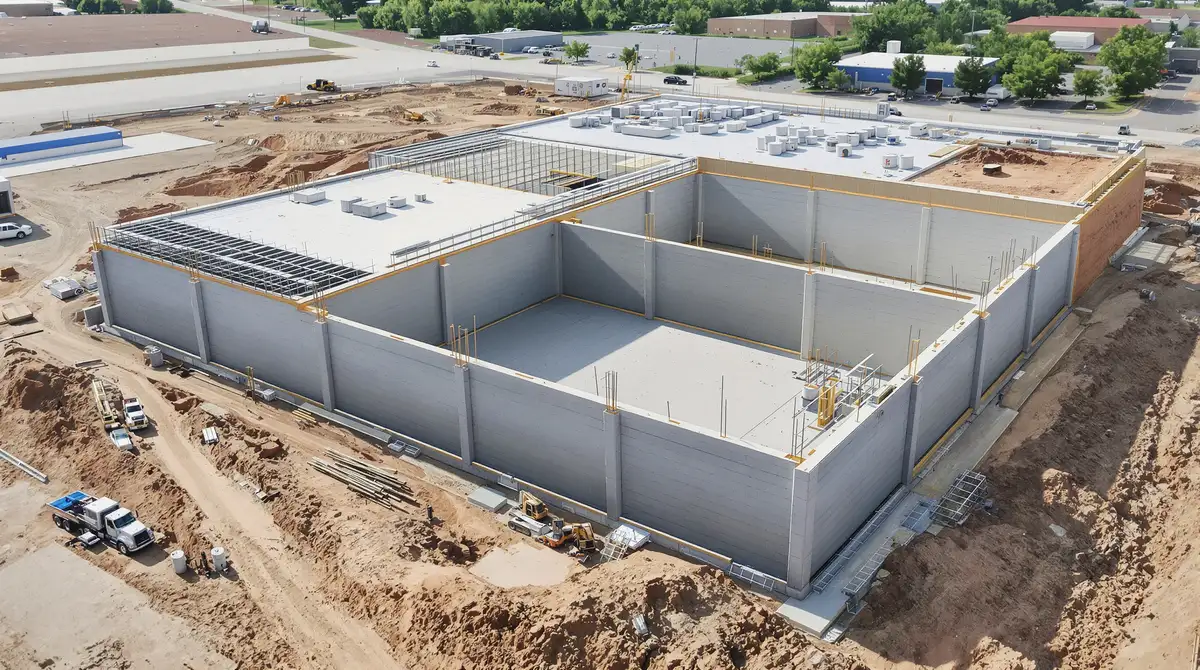
Poured-in-place foundation walls with snap-tie forming systems, waterproofing membrane, and drainage board. Stem walls, basement walls, and retaining walls handled by the same crew. Learn more →
Equipment Pads & Specialty Foundations
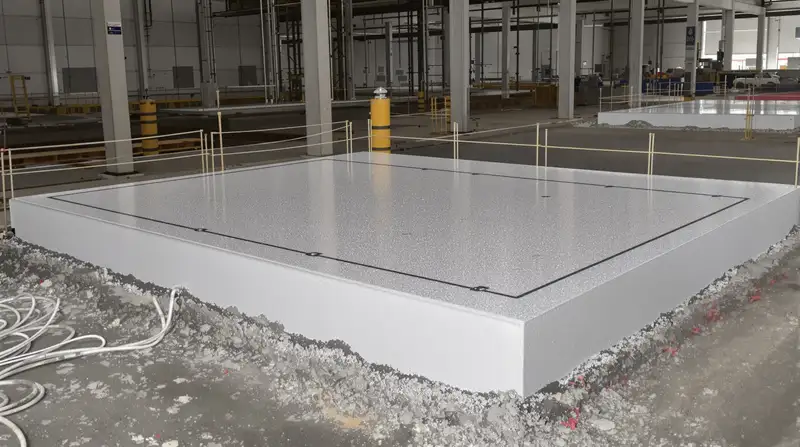
Machine foundations with vibration isolation, anchor bolt templates, elevator pits, loading dock pits, and embedded conduit — precision work where tolerances are measured in sixteenths of an inch. Learn more →
How Much Does a Commercial Foundation Cost in Lexington?
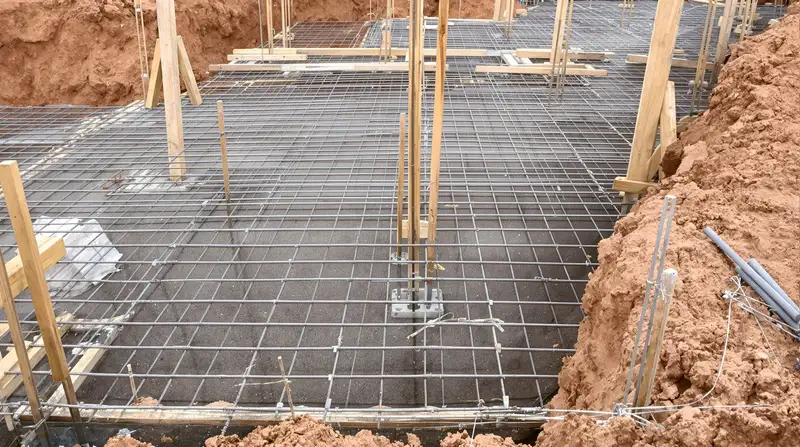
Lexington sits in Lafayette County along the Missouri River, and foundation costs here reflect the alluvial soil profile that dominates the bottomland and the clay-loess upland on the bluffs above. Sites near the river and in the lower town carry alluvial sand-silt-clay deposits with a high water table that may require dewatering during deep footing excavation — a real line item that upland clay sites do not carry. Upland sites along MO-13 and US-24 sit on Lafayette County clay that requires standard over-excavation and structural fill replacement. Lexington's small market and distance from KC — about 40 miles east on I-70 — adds modest mobilization cost for metro-based concrete suppliers.
Which Foundation Type for Your Lexington Project?
| Your Project | Recommended Foundation | Why |
|---|---|---|
| Single-story retail / restaurant | Spread footings + slab-on-grade | Standard, cost-effective, proven on KC clay |
| Warehouse / distribution | Mat foundation or spread footings | Heavy rack and equipment loads need distribution |
| Multi-story office / medical | Grade beams on piers | Bypasses unstable surface clay for deep bearing |
| Equipment-heavy industrial | Specialty equipment pads | Precision embeds, vibration isolation, load-specific |
| Below-grade / basement | Foundation walls + waterproofing | Full below-grade envelope with moisture protection |
Lexington's commercial construction is split between the historic downtown near the Missouri River and the highway corridors along MO-13 and US-24. Downtown and lower-town projects encounter alluvial soil with potential dewatering requirements — making foundation design more complex than a standard clay site. Spread footings with over-excavation handle most upland commercial buildings along the highway corridors. Where alluvial soil and high water table are present, grade beams on drilled piers or deeper spread footings with dewatering may be specified. Aaron reviews each Lexington site's geotech to match the foundation approach to the specific soil zone — alluvial or upland clay.
Geotech Requirements in Lexington
Lexington sits in Lafayette County with two distinct soil profiles: Missouri River alluvial deposits in the bottomland and lower town, and clay-loess upland soil on the bluffs above. The alluvial zone carries variable sand-silt-clay layers with a high water table that can require dewatering for deep excavations. The upland clay requires standard over-excavation to reach competent bearing. Missouri Department of Natural Resources (MoDNR) stormwater and floodplain permits apply to all commercial grading in Lexington, with additional floodplain requirements for sites near the Missouri River.
Foundation Repair vs. New Construction in Lexington
Lexington has some of the oldest commercial buildings in the region — the historic downtown includes structures from the 1840s through the Civil War era, many built during the city's prominence as a Missouri River port. These buildings sit on original stone footings that have endured nearly two centuries of alluvial moisture cycling. The highway corridors carry mid-century commercial from the 1950s through the 1970s on upland clay. Foundation repair on Lexington's historic downtown buildings requires specialized evaluation of original stone construction and compatibility with modern stabilization techniques, while highway-corridor buildings follow more conventional repair approaches.
Commercial Construction in Lexington
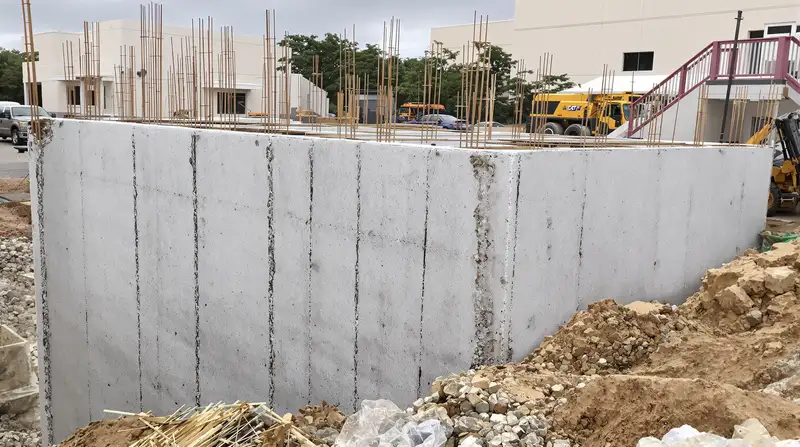
Lexington's commercial construction is modest, centered on two areas. The MO-13 and US-24 highway corridor generates occasional QSR, convenience retail, and service commercial pad work serving the city and the surrounding Lafayette County agricultural area. Historic downtown Lexington sees periodic renovation and adaptive-reuse of Civil War-era and river-trade-era commercial buildings. New pad construction is infrequent. Lexington serves as Lafayette County's commercial center, but the pipeline is honest — a small market with specialized historic renovation demand and periodic highway-corridor development.
Commercial Foundation FAQs — Lexington, MO
How much does a commercial foundation cost in Lexington?
Commercial foundation costs in Lexington depend on foundation type, soil conditions, structural loads, and mobilization distance from the KC core and whether the site is bottomland (dewatering) or bluff-top (clay). Every project gets a detailed line-item bid based on the structural drawings and geotech report. Call (816) 721-1699 for a site visit and bid.
How deep do footings need to be in Lexington, MO?
Minimum footing depth in Lexington is 30 to 36 inches below finished grade to clear the frost line. Lexington spans two soil zones. Bluff-top sites may reach competent clay at moderate depths. Bottomland sites near the Missouri River face alluvial variability and may require deep foundations or dewatering. The structural engineer and geotech report dictate the actual depth for each project.
What soil conditions affect foundations in Lafayette County?
Lafayette County is dominated by Missouri River alluvial deposits in the bottomlands and residual clay on the bluffs — two distinct soil profiles in one city. Bottomland sites face alluvial variability and high water tables, while bluff-top sites deal with residual clay. Every Lexington project requires site-specific investigation. Over-excavation, structural fill, and proof rolling are standard mitigation measures on commercial pads.
How does Lexington's alluvial and clay soils affect foundation design?
Lexington's dual soil profile — Missouri River alluvium below and residual clay on the bluffs — means no two sites have the same foundation solution. The geotech investigation is the single most important document. The geotech report is the starting point for every foundation design decision in Lexington — we review it, test-pit where needed, and price the soil remediation honestly.
What equipment pad foundations do you pour in Lexington?
We pour machine foundations with vibration isolation, equipment pads with embedded anchor bolt templates, loading dock pits, and elevator pits. Anchor bolt templates are precision-set to hold J-bolts or L-bolts in their exact engineered positions — if the template shifts during the pour, the equipment does not bolt down.
What is a grade beam foundation and when is it needed in Lexington?
A grade beam is a reinforced concrete beam that spans between drilled piers or piles, carrying the building load to deep bearing strata below problematic surface soil. In Lexington, grade beams are specified when the upper alluvial and clay soils is too deep, variable, or weak for shallow spread footings. The structural engineer designs the system based on the geotech boring log.
Nearby Service Areas
Ready to Pour Your Foundation in Lexington?
From excavation to finished concrete — we handle commercial foundations in Lexington end-to-end. Call (816) 721-1699 or request your free bid online.