
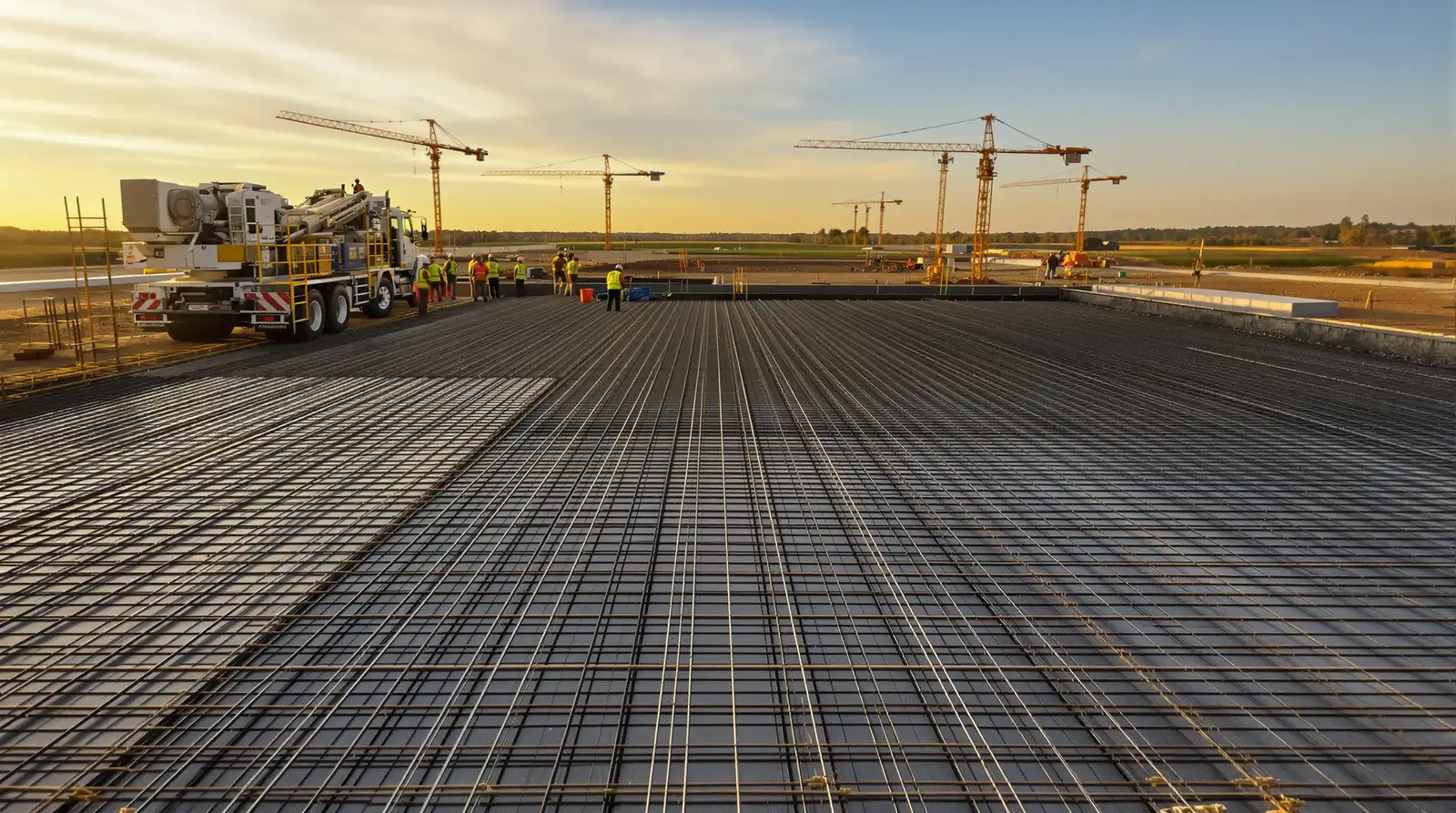
Commercial Foundation Contractor in Spring Hill, KS
Spread footings on limestone and grade beam foundations for Spring Hill's rapidly expanding southern Johnson County growth corridor — built by the crew that poured the Taco Bell in Overland Park.
Get Your Free Estimate
★★★★★ 29 Five-Star Google Reviews
Commercial Foundations in Spring Hill, KS
What's Being Built in Spring Hill
Spring Hill is one of the fastest-growing commercial markets in southern Johnson County. Spring Hill is one of the fastest-growing communities in the KC metro. The Panasonic battery plant development, US-169 commercial frontage, and rapid residential expansion generate a surging pipeline of commercial and residential foundation work. The US-169, the 191st Street commercial corridor, and the Panasonic battery plant development zone generates a steady demand for commercial foundations — restaurant pads, retail outlots, industrial facilities, and the residential subdivisions expanding along the corridor. Every one of them starts with the same soil question: how shallow is the limestone?
Spring Hill sits on clay over limestone — the Bethany Falls and Argentine formations appear at 3 to 8 feet below finished grade. That shallow bedrock is both an advantage and a challenge: spread footings can often bear directly on rock with excellent bearing capacity and minimal settlement, but any excavation deeper than 5 or 6 feet — elevator pits, deep utility runs, caisson sockets — may hit limestone that requires mechanical breaking or sawing. Rock excavation is a real line item in Spring Hill, and it needs to be priced before the bid, not discovered during the dig.
Ford Concrete serves Spring Hill from our Independence yard. We poured the Taco Bell foundation in Overland Park, we know how Johnson County inspection standards work on a footing excavation, and we test-pit before we bid so the rock allowance is real. Aaron Ford walks every Spring Hill site before a number goes out.
Foundation Challenges in Spring Hill's Soil
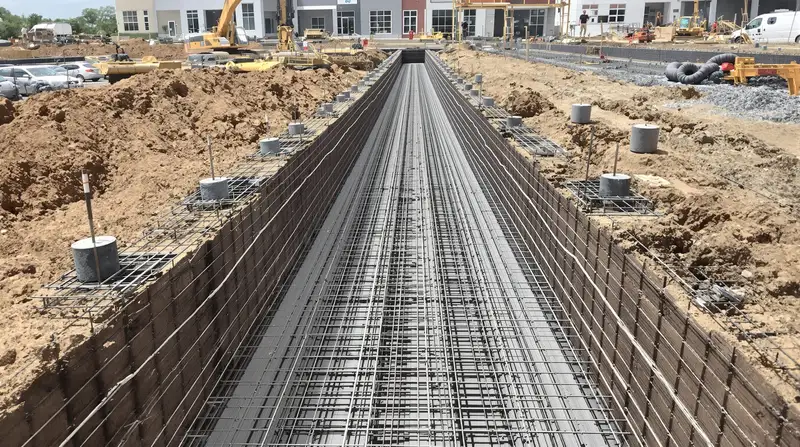
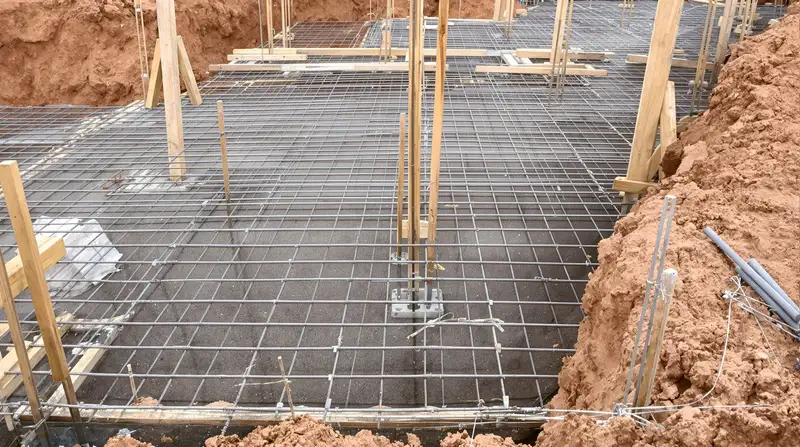
Spring Hill sits on clay over limestone — the Bethany Falls and Argentine formations appear at 3 to 8 feet below finished grade. This is the same southern Johnson County geology as Gardner and Stilwell. Spread footings on rock provide excellent bearing capacity with minimal settlement. Rock-socket piers drilled into the limestone handle heavier structural loads.
Spring Hill's explosive growth — driven by the Panasonic battery plant and associated development — is converting agricultural ground at a rapid pace. The clay above the limestone on former farm parcels may carry variable compaction that must be evaluated before the foundation design is finalized. Rock excavation remains the primary cost variable on deep elements. See our Kansas City soil conditions guide.
One Contractor — Excavation Through Flatwork in Spring Hill
One contractor handles the full scope from rock excavation to finished concrete in Spring Hill. We handle the limestone corridor regularly — test-pit, excavate through clay to rock, form and pour the foundation, then transition into slab-on-grade and flatwork. We poured the Taco Bell foundation in Overland Park and serve southern Johnson County's fastest-growing market. One bid, one schedule, one accountable contact in Aaron Ford.
- ▶ Same crew from excavation through finished concrete
- ▶ Built the Taco Bell foundation in Overland Park
- ▶ Rock excavation priced honestly before the dig
- ▶ Johnson County permitting handled in-house
Foundation Services in Spring Hill
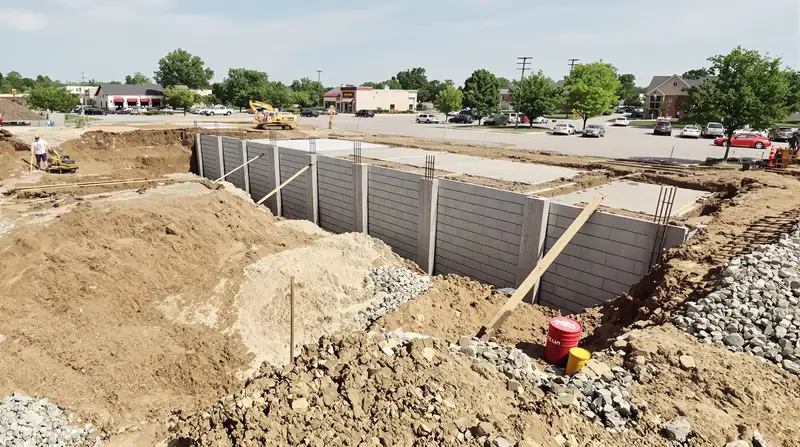
Spread Footings & Continuous Footings
Isolated and continuous footings sized to structural loads, formed and poured to the bearing depth specified in the geotech report. The most common commercial foundation element in Spring Hill. Learn more →
Grade Beam & Pier Systems
Reinforced grade beams spanning between drilled piers to bypass unstable surface soils. Void forms protect against clay uplift in Johnson County. Learn more →
Mat Foundations
Single continuous slabs distributing loads across the full building footprint. We poured the Amazon warehouse mat foundation in Riverside — continuous placement, thermal monitoring, zero cold joints. Learn more →
Foundation Walls & Below-Grade Work
Poured-in-place foundation walls with snap-tie forming systems, waterproofing membrane, and drainage board. Stem walls, basement walls, and retaining walls handled by the same crew. Learn more →
Equipment Pads & Specialty Foundations
Machine foundations with vibration isolation, anchor bolt templates, elevator pits, loading dock pits, and embedded conduit — precision work where tolerances are measured in sixteenths of an inch. Learn more →
How Much Does a Commercial Foundation Cost in Spring Hill?
Spring Hill sits in southern Johnson County on clay-over-limestone geology consistent with neighboring Gardner, Olathe, and Edgerton. The Bethany Falls limestone typically appears at 3 to 8 feet below grade, with moderate-plasticity clay overburden above. Foundation costs follow the southern JoCo pattern: spread footings bearing on rock reduce over-excavation costs but add rock-excavation line items for deep elements like utility trenches, elevator pits, and caisson sockets. Spring Hill's commercial market is growing alongside rapid residential development but remains smaller than Gardner or Olathe. New-construction pads on previously agricultural land dominate the commercial foundation pipeline. Rock depth variation lot-to-lot means the honest price comes from geotech data, not assumptions about the limestone surface.
Which Foundation Type for Your Spring Hill Project?
| Your Project | Recommended Foundation | Why |
|---|---|---|
| Single-story retail / restaurant | Spread footings + slab-on-grade | Standard, cost-effective, proven on KC clay |
| Warehouse / distribution | Mat foundation or spread footings | Heavy rack and equipment loads need distribution |
| Multi-story office / medical | Grade beams on piers | Bypasses unstable surface clay for deep bearing |
| Equipment-heavy industrial | Specialty equipment pads | Precision embeds, vibration isolation, load-specific |
| Below-grade / basement | Foundation walls + waterproofing | Full below-grade envelope with moisture protection |
Spring Hill commercial construction serves a rapidly growing residential community with QSR, retail, and service-commercial pads along the US-169 corridor and Webster Street commercial area. Most commercial projects are single-story pads where spread footings bearing on limestone are the standard system when rock is accessible at reasonable depth. The growing residential base drives demand for convenience retail, restaurants, and medical office space — all generating conventional foundation scopes. Grade beams on rock-socketed piers may be specified where rock depth varies too much across a footprint for uniform spread footings. Aaron evaluates Spring Hill site geotech to determine whether the limestone supports direct bearing or whether the clay overburden requires a different approach.
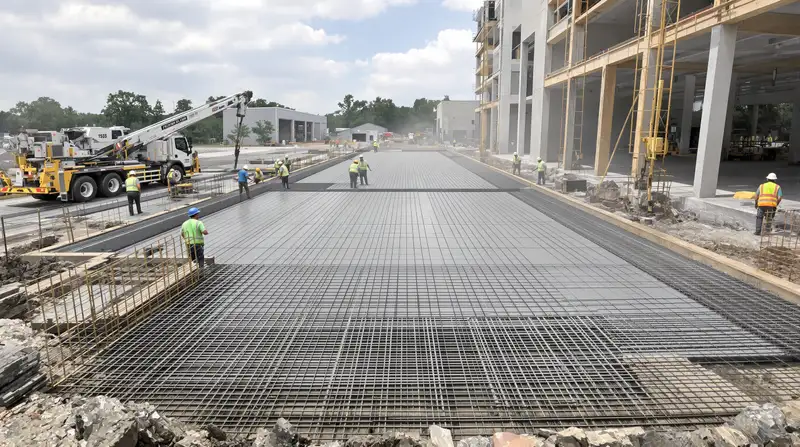
Geotech Requirements in Spring Hill
Spring Hill's geology is clay over Bethany Falls limestone, with rock depth varying from 3 to 8 feet across the city's commercial zones. The clay overburden is moderate-plasticity residual material — less expansive than the deep Wymore clay in northern Johnson County but still requiring moisture-controlled compaction for slab-on-grade work. Kansas Department of Health and Environment (KDHE) stormwater permits apply to all commercial grading in Spring Hill. The geotech investigation maps rock depth across each site to determine whether footings bear on limestone or on clay — a decision that drives both foundation design and cost.
Foundation Repair vs. New Construction in Spring Hill
Spring Hill's commercial stock is predominantly new construction — most commercial development has occurred since the mid-2000s as residential growth drove demand for local retail and services. These buildings generally perform well on their limestone-bearing or engineered-clay foundations. Older commercial properties along Webster Street in the original Spring Hill downtown area may include mid-century structures with footings that predate modern geotech standards. Foundation repair volume in Spring Hill is low, reflecting the young age of most commercial buildings and the stable bearing that limestone provides when footings reach rock.
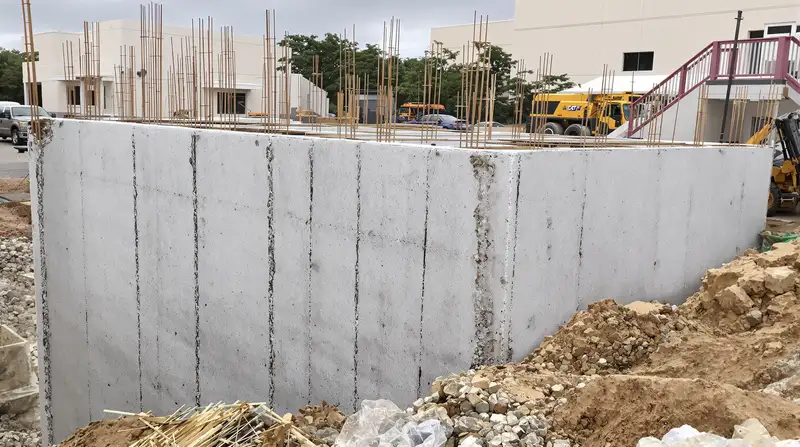
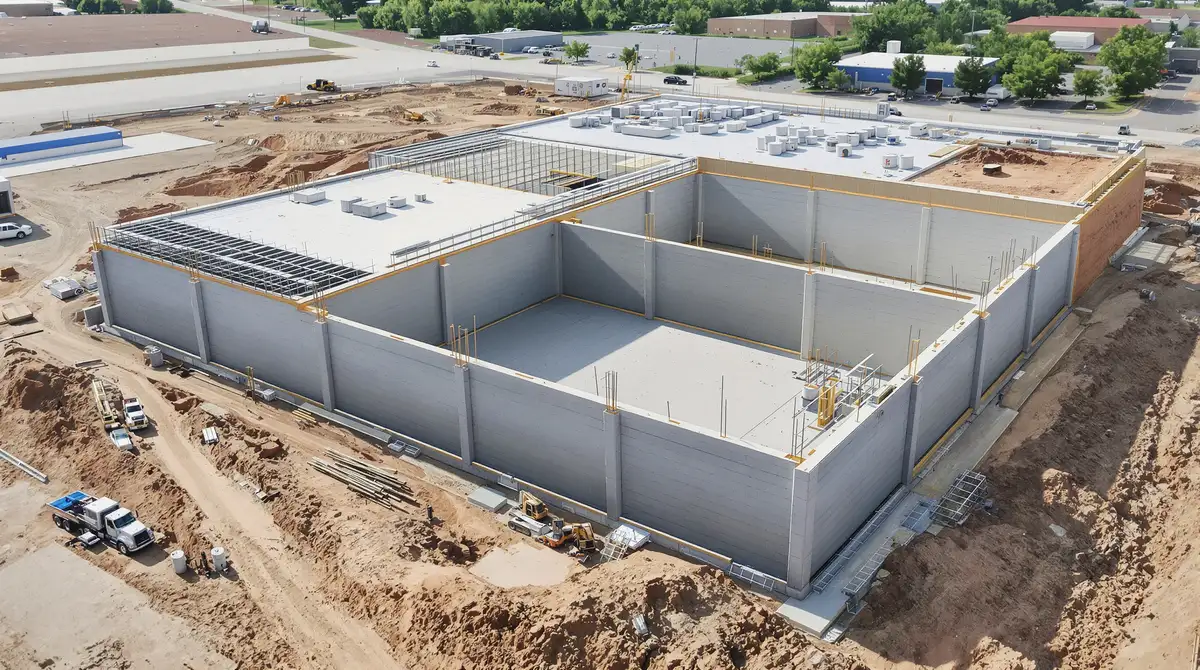
Commercial Construction in Spring Hill
Spring Hill's commercial construction follows residential growth along the US-169 corridor and the Webster Street commercial area. US-169 from I-35 through Spring Hill generates QSR, retail, and convenience-store pad work driven by residential rooftop counts. The Webster Street corridor carries smaller-scale retail and service-commercial development. New residential subdivisions south and east of the city core are creating demand for neighborhood-scale commercial pads. Spring Hill's commercial pipeline is growing but remains driven by residential rooftop generation — each new subdivision brings demand for the restaurant and retail pads that follow.
Commercial Foundation FAQs — Spring Hill, KS
How much does a commercial foundation cost in Spring Hill?
Commercial foundation costs in Spring Hill depend on foundation type, soil conditions, structural loads, and rock excavation volume on deep elements and the rapid pace of development converting agricultural ground. Every project gets a detailed line-item bid based on the structural drawings and geotech report. Call (816) 721-1699 for a site visit and bid.
How long does a commercial foundation take in Spring Hill?
Timeline depends on foundation type and complexity. Spread footings for a smaller commercial building can be formed, poured, and stripped in one to two weeks. Larger foundations with grade beams, deep footings, or mat slabs require more preparation. We provide a detailed schedule during bidding.
What is the frost depth in Spring Hill for commercial footings?
The frost depth in Spring Hill and across the KC metro is 30 to 36 inches below finished grade. All exterior footings must be placed below this depth to prevent heave from freeze-thaw cycles. In practice, many Spring Hill footings are set deeper than the frost line to reach competent bearing in the underlying limestone bedrock profile.
How does Spring Hill's limestone bedrock profile affect foundation design?
Spring Hill's shallow limestone provides a consistent, high-capacity bearing surface for foundations. The rapid residential and commercial growth is converting agricultural ground, and the clay above the rock may carry variable compaction from farming. The geotech report is the starting point for every foundation design decision in Spring Hill — we review it, test-pit where needed, and price the soil remediation honestly.
Do you work with GCs on commercial projects in Spring Hill?
Yes. General contractors are our primary clients on commercial foundation work in Spring Hill. We bid from structural drawings, coordinate with the special inspector on rebar and formwork, and deliver the foundation on the GC's schedule. Aaron Ford is the single point of contact from bid through backfill.
Nearby Service Areas
Ready to Pour Your Foundation in Spring Hill?
From excavation to finished concrete — we handle commercial foundations in Spring Hill end-to-end. Call (816) 721-1699 or request your free bid online.