
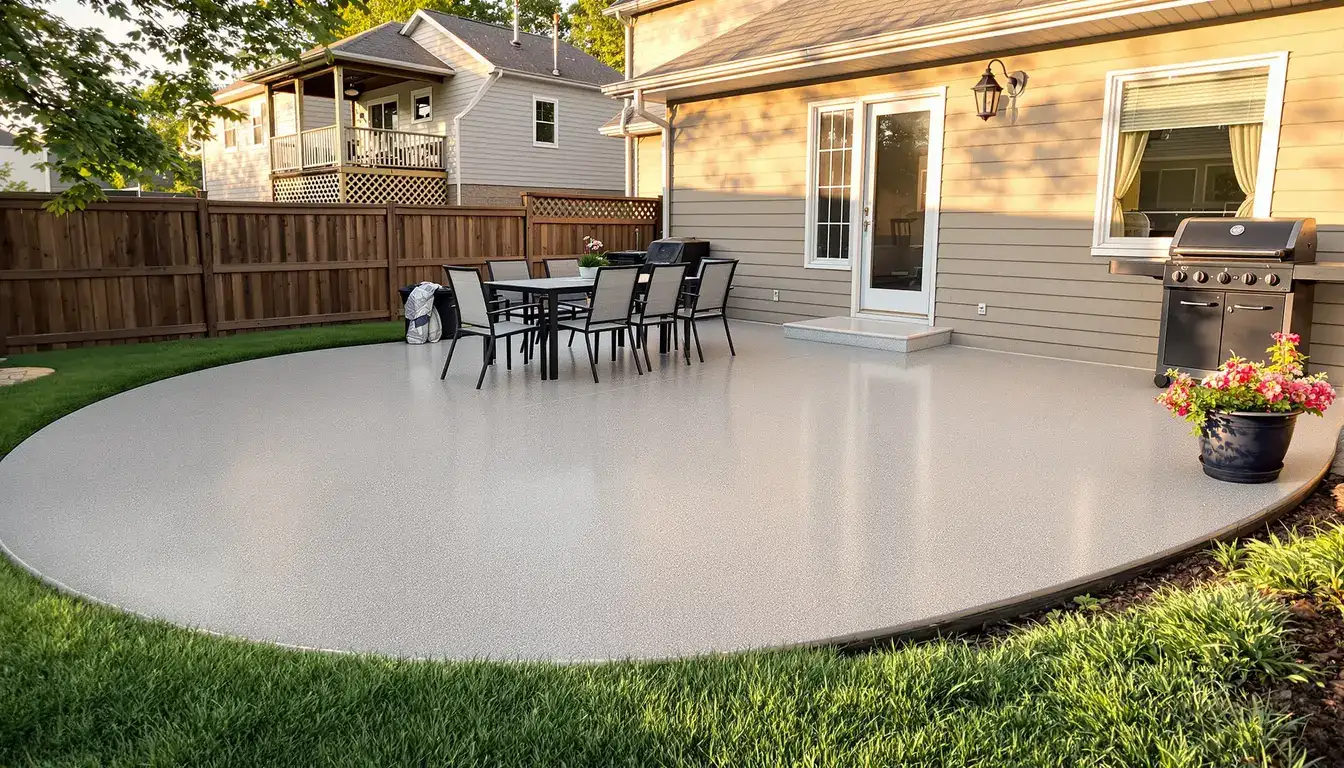
Concrete Patios & Outdoor Spaces in Spring Hill, KS
Concrete patios built for Spring Hill's split ground — where new fill and shallow limestone can meet under one slab on the Johnson–Miami line
Concrete Patios & Outdoor Spaces in Spring Hill
Custom concrete patio design and installation for backyards, outdoor living areas, and commercial courtyards. Ford Concrete serves Spring Hill, KS and the entire Kansas City metro with more than a decade of experience and a 5-star reputation.
Spring Hill at a Glance
- Population
- 10,200
- State
- Kansas
- County
- Johnson County
- Schools
- Spring Hill USD 230
Two kinds of ground under one Spring Hill patio
A concrete patio in Spring Hill lasts when the base is built for two grounds at once. On many lots here, engineered fill from a new subdivision sits over a shelf of shallow limestone, so one end of a slab can settle on soft ground while the other heaves over rock. We probe both, build a compacted base to match, and cut contraction joints to hold it together.
That split is what makes Spring Hill its own case. The town straddles the Johnson–Miami county line and has grown fast along US-169, dropping new neighborhoods like Woodland Reserve and Eagles Landing onto graded pads where the rock is never far down. A patio that ignores either half of that ground — the fill that settles or the limestone that lifts — cracks within a few seasons. We read the whole lot before we quote. If your slab is only worn on top, our resurfacing may be enough.
Building one base for fill and rock
The base has to answer both problems on the same slab. Where the pad is fill, we dig to see how deep it runs and rebuild it in compacted lifts so it won't consolidate under load; where the rock is shallow, we build an open, draining base so water can't perch and freeze against the concrete. A held restraint point around the edge keeps the whole slab steady where those two grounds meet.
We separate the patio from the house with an isolation joint so it can move without pulling on the foundation, and on wider pours we set doweled joints so load transfers across the joint instead of one panel dropping below the next. The slab goes down at 4,000 PSI — the same mix and crew behind heavy commercial flatwork, sized for a backyard that sits on mixed ground.
The trick is the transition. Where the soft fill gives way to the rock shelf, the two grounds want to move by different amounts, so we don't let a single stiff slab bridge them blind — we build the base to blend across that line and place a joint over it, so the change in the ground meets a planned break in the concrete instead of a random crack.
Settling on one end, lifting on the other
The reason mixed ground is tricky is that it fails two ways at once. The fill side tends to settle, dropping a corner as loose ground consolidates; the rock side tends to heave, lifting when trapped water freezes on the shelf. Left as one uncut slab, a patio caught between them tears somewhere in the middle.
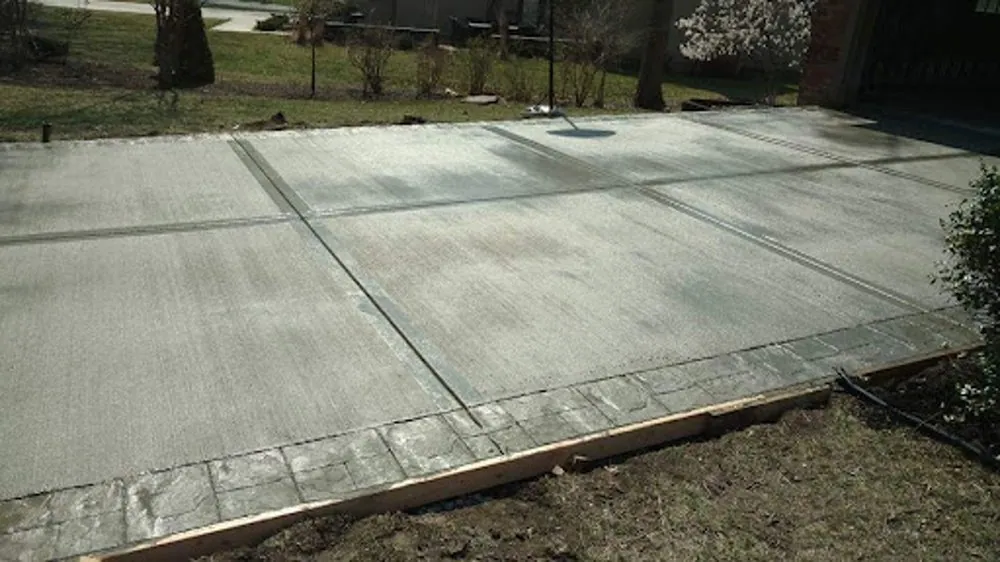
We plan for both. Contraction joints on a roughly ten-foot grid let each part of the slab move on its own, and we pay extra attention to the re-entrant corner — the inside angle at a step or doorway — where a slab pulled two directions is most likely to crack. Placed right, the joints turn unavoidable movement into hairlines you'll barely see.
Doweled joints do the heavy lifting at that seam. Smooth steel dowels tie the panels across a joint so load carries from one to the next; when the fill side wants to drop or the rock side wants to lift, the dowels keep the two panels level with each other instead of letting them step apart. We reinforce the slab as well, fiber or rebar, so it spans a soft spot in one piece.
Joint depth is part of it too — we cut roughly a quarter of the slab's thickness so a crack, when it comes, forms clean at the base of the groove instead of climbing through the top. On mixed ground where some movement is a given, that control is what keeps the surface reading as tooled lines rather than damage.
Getting water off both grounds
Water is the common enemy of both halves. It softens fill and it perches on rock, so a Spring Hill patio has to shed it fast either way. We set the threshold elevation a step below the door and pitch the whole slab away from the house so runoff never pools against the foundation or the shallow shelf.
That positive drainage — a steady quarter inch per foot — is built into the grade from the doorway out, not patched in with a drain afterward. On split ground, moving water across open ground is the surest way to keep the fill firm and the rock dry underneath.
Broom or stamped for a Spring Hill backyard
A new home off US-169 deserves a patio that looks designed with it. The call is usually a broom vs stamped finish: broomed concrete is clean and slip-sure for a family yard, stamped concrete carries a stone or plank pattern. We set a mockup so you approve color and texture outdoors, in the light the patio will actually live in.
Because this ground needs plenty of joints, we make them part of the design. Joint pattern continuity — squaring the control joints to the house, the posts, and the stamp lines — keeps a heavily jointed slab reading as one clean surface instead of a grid of accidents. See finished textures in our gallery.
Whatever finish you pick, we seal it with an eye on vapor transmission and plan a light reseal every couple of years, so a stamped pattern keeps its depth and a broomed surface sheds water instead of soaking it up through a Kansas winter.
Replacing an older patio off Webster Street
Not all of Spring Hill is new. Around Webster Street and the older core, patios poured decades ago went down thin and jointless. Without a contraction joint anywhere, years of settling fill and shifting rock have left them cracked and uneven, low in one place and lifted in another.
When the surface is worn but the slab is still solid underfoot, resurfacing can add years. When a corner has dropped or lifted and the panels no longer line up, the base is the problem on both grounds, and a new pour over a rebuilt base is the fix that holds. We'll show you which one you have — and if we're tearing out anyway, that's the time to enlarge the patio or square up an odd shape.
A slab that's low on the fill end and high over the rock is also a trip hazard where the panels meet, which is often what finally decides a homeowner on a rebuild over one more patch. We'll walk it with you and price both so the choice is clear.
Do you need a permit for a patio in Spring Hill?
Spring Hill sits on the Johnson–Miami county line, so which rules apply can depend on which side of town you're on, and a covered or attached patio always draws more review than a simple slab. We confirm the jurisdiction, pull the City of Spring Hill permit, keep the slab off setbacks and easements, and confirm the threshold elevation keeps runoff on your side of the line.
We build across the southern edge of the metro, so whether you're near Gardner, down toward Louisburg, or comparing with family in Olathe, we match the base to the ground — and Spring Hill's mix of fill and rock is its own job. Start on the main concrete patio page to see how we build.
Ready to build your Spring Hill patio?
From call to concrete — the fastest in KC.
On Spring Hill's mix of fill and shallow rock, a patio holds only when the base answers both. Ford probes the whole lot, builds a base for each ground, and hands you a written number instead of a guess. Call (816) 721-1699 to set up a site visit.
How we pour Concrete Patios & Outdoor Spaces in Spring Hill
Walk the lot and probe both grounds
We check for soft subdivision fill and shallow limestone across your Spring Hill lot and set the base plan for whichever we find where.
Lay out shape and threshold
We mark the footprint, the joint grid, and the threshold elevation below the door so water always leaves the house.
Build the base for each half
We compact fill in lifts where the ground is soft and lay open, draining stone where the rock is shallow, tying it into one firm base.
Form, grade, and hold the edge
We form the slab, build the drainage pitch, and set the restraint point and doweled joints before we pour.
Pour 4,000-PSI concrete
We place and screed 4,000-PSI concrete, then float and finish to the broom or stamped texture from your mockup.
Cut the joints on time
We saw the contraction joints on a planned grid so each part of the slab can move without cracking the field.
Seal, cure, and walk it
We cure and seal the patio, then walk it with you so you know how the mixed ground was handled.
Warning signs on Spring Hill Concrete Patios & Outdoor Spaces
One corner low, another high
A slab that's dropped at one end and lifted at another is sitting on split ground — fill settling on one side, rock heaving on the other.
Cracks out of an inside corner
Cracks leaving a re-entrant corner show the slab tearing where stress gathers as the two grounds pull it different ways.
Puddles that linger after rain
Standing water means the slab is too flat — and on mixed ground, that water both softens fill and feeds heave over rock.
Panels stepping apart at a joint
When panels no longer sit level across a joint, the base under one has moved, which is common where fill meets a shelf.
A surface flaking off grit
Scaling on the top layer points to a weak surface or a slab that stays damp, typical of the older jointless patios in town.
A widening gap at the house
A seam opening where the patio meets the wall shows there was no isolation joint to let the slab move on its own.
How Ford earns Spring Hill work
We read both grounds first
On a Spring Hill lot we check for soft fill and shallow rock before we quote, then build a base that answers both — the step that keeps a split-ground slab flat.
Right on the county line
Spring Hill sits along US-169 on the Johnson–Miami line, an easy run for us to walk your lot, confirm the jurisdiction, and get it poured.
Heavy-flatwork discipline, backyard scale
The crew that pours commercial slabs brings that flatness and joint control to a patio built on mixed ground.
29 reviews, 4.9 stars
Ford Concrete keeps a 4.9-star average across 29 Google reviews from homeowners around the metro.
The projects behind our name
From your driveway to an Amazon warehouse — the same crew, the same standards, every project.
Taco Bell
New Construction
Overland Park, KS
Domino's Pizza
New Construction
Independence, MO
Freddy's
New Construction
Kansas City
Tidal Wave Car Wash
New Construction
Kansas City
Amazon
New Construction
Riverside, MO
Nortian Food Grade Protein Facility
New Construction
Springfield, MO
Start with a free Spring Hill estimate
Or call us directly: (816) 721-1699
Concrete Patios & Outdoor Spaces in Spring Hill — FAQs
Why is Spring Hill's ground harder to build on?
Do I need a permit for a patio in Spring Hill?
Why do patios crack at the corners?
How do you keep a slab flat over both fill and rock?
How long does a patio take to build in Spring Hill?
Can you make my patio bigger when you replace it?
More Spring Hill concrete services
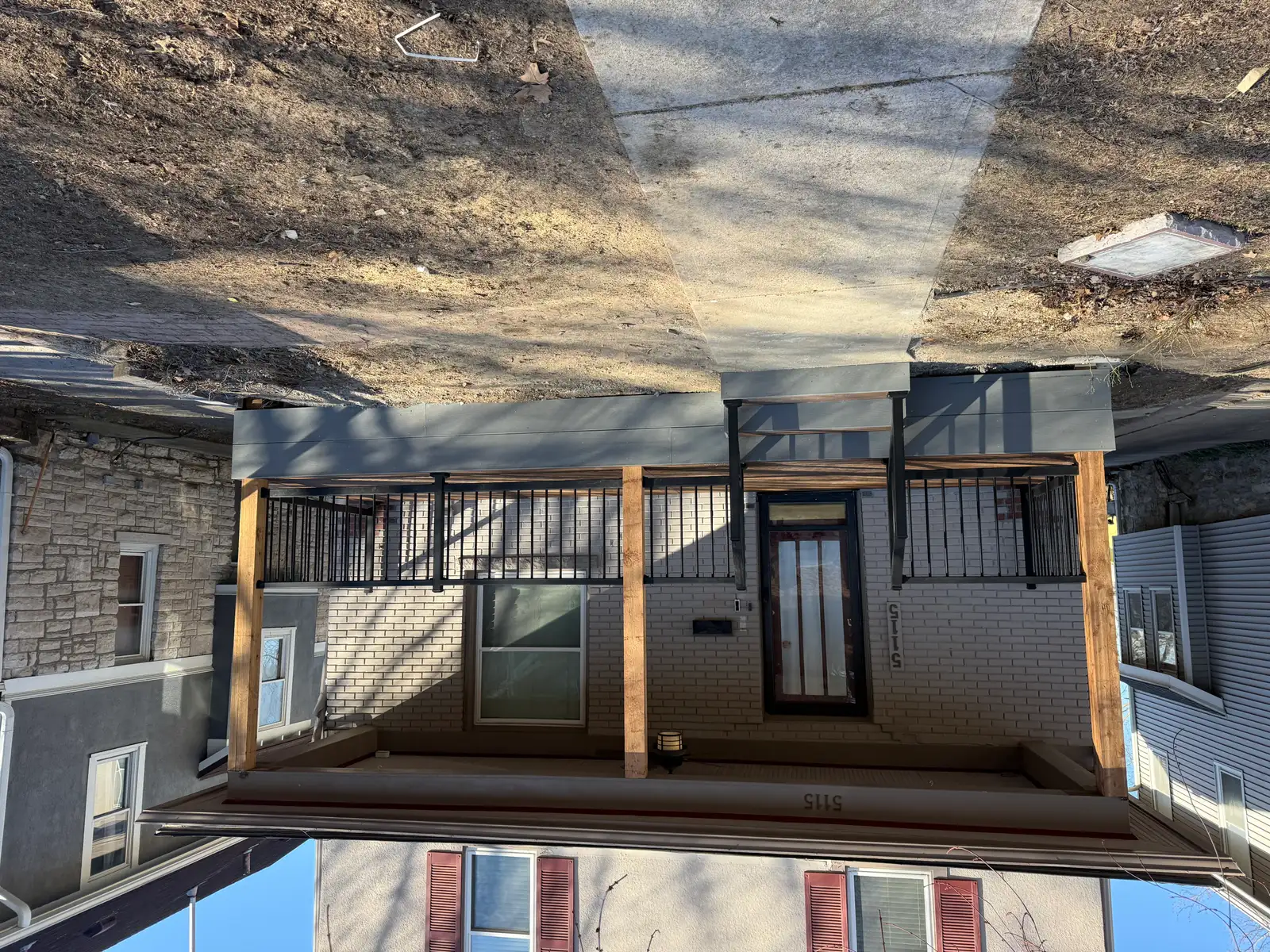
Serving Spring Hill and the surrounding metro
Get your Spring Hill project moving
From call to concrete — the fastest in KC.
Get a free, no-obligation estimate for your concrete project. We serve the entire Kansas City metro — call (816) 721-1699 or request your estimate online.