Concrete Repair in Lexington, MO
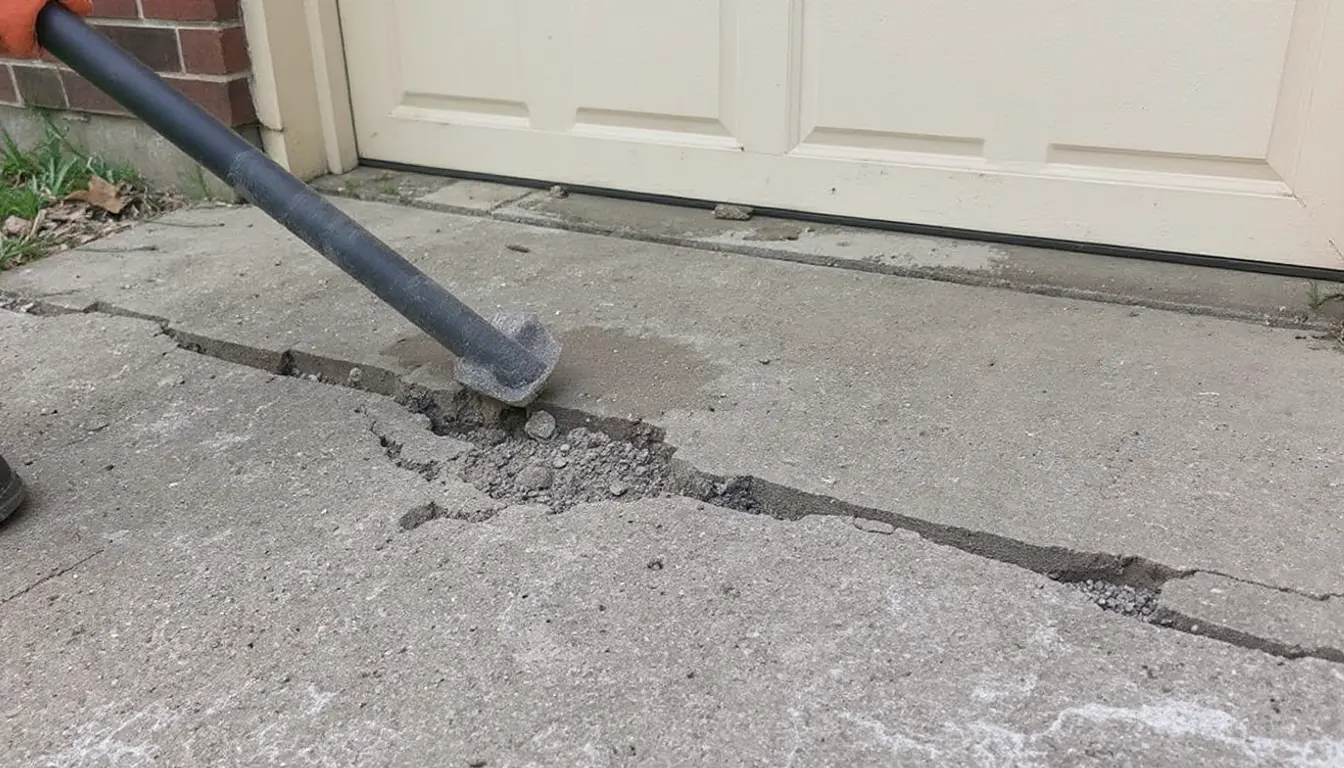
Concrete repair for Lexington — from cracks that reopen every wet season on Lafayette County's heavy Grundy clay to slabs undercut near the Missouri River bluffs. On soil this expansive, when we repair a crack matters as much as how.
Concrete Repair in Lexington
Concrete crack repair, spalling repair, joint sealing, and structural restoration for all concrete surfaces. Ford Concrete serves Lexington, MO and the entire Kansas City metro with more than a decade of experience and a 5-star reputation.
Lexington at a Glance
- Population
- 4,652
- State
- Missouri
- County
- Lafayette County
- Schools
- Lexington R-V School District
On Lexington's heavy clay, timing the repair matters
Lexington sits on Grundy clay — among the most expansive soil in the region. That single fact changes how a repair should be approached: the ground swells when wet and shrinks when dry, so an active crack is often wider in one season than another. Repair it locked at an extreme, and normal movement stresses the fix from day one.
Above the Missouri River, on the bluffs where the town's historic district sits, that heavy clay drives seasonal cracking that reopens year after year. The state tracks these soils through MoDNR. KC-metro property owners rate Ford Concrete 4.9 stars across 29 reviews for repairs that account for how the ground actually behaves, not just what the crack looks like the day we see it. You can read what they say in our client testimonials.
Why we read the crack before we commit to the fix
The first question on expansive clay is whether a crack is active — still opening and closing with the seasons — or dormant. A dormant crack on settled ground is a clean repair. An active crack on Grundy clay will keep working, and a rigid fix placed across it at the wrong moment just cracks again next to the repair.
So we read the crack: how wide it is, whether the edges show fresh movement, and where the soil is in its wet-dry cycle. That read tells us whether to repair now or address the movement first. It's the same diagnostic discipline we bring to the expansive clay in nearby Odessa and Oak Grove.
Repairing at a neutral moisture state, not an extreme
The practical payoff of understanding the cycle is timing. On heavy clay, a crack repaired when the soil is at a mid-range moisture — neither swelled to its wettest nor shrunk to its driest — sits closest to the slab's average position. The repair then has room to handle the seasonal movement in both directions instead of being maxed out from the start.
Where an active crack has to be handled, we address the movement, prepare the substrate to sound material, and place the repair so it bonds and carries the seasonal shift. It's a more considered approach than filling whatever gap happens to be there today — and on Lexington's clay, it's the difference between a repair that lasts and one that reopens by the next wet season.
Two grounds: the bluffs and the river terraces
Lexington's geology splits by elevation. Up on the bluffs, the historic district and older neighborhoods sit on heavy Grundy clay that shrinks and swells — the failures there are active movement cracks. Down on the river terraces near the Missouri, slabs sit on alluvial ground with a higher water table, where the base stays wet and soft. Same town, opposite problems.
Where a slab sits decides the repair. Bluff-top movement cracks need the clay cycle read; terrace-level slabs need the wet base and drainage addressed before the concrete. We figure out which ground you're on first — because a repair built for one fails on the other. On the terraces, our soil-conditions guide covers why wet alluvial base behaves the way it does.
Bluff-edge slabs and erosion undercut
On Lexington's river bluffs, some slabs fail from the side, not the surface. Runoff and downspout water running toward the bluff edge scours the ground and undercuts the substrate below a slab, leaving it unsupported over a void. Sound the slab and it rings hollow. A surface patch on an undercut slab has nothing under it and drops in.
Those repairs start with the water. We intercept and redirect the runoff, rebuild the base to support the slab, and only then repair the concrete. Ignore the erosion and the void just reopens downslope. It's the approach behind our erosion-control work, applied to bluff-side slabs that are losing their base a little more each rain.
Spalling and scaling on the historic district walks
Lexington's historic downtown carries decades of deicer on public and storefront walks, and on aging concrete that shows up as surface scaling and, where reinforcement is shallow, spalling over rusting steel. A patch over corroded steel breaks off again, so those repairs have to reach the corrosion, not skin over it.
We remove concrete behind any exposed reinforcement, treat the steel, and rebuild squared to a real depth with no feather-edge. Where scaling is surface-only on a sound slab, we repair and reseal with mixes built for this climate. On a historic walk, we also match the finish so the repair reads as part of the streetscape, not a scar across it.
What a Lexington repair costs, and how we quote it
We don't price concrete repair by the foot before seeing it, because a bluff-top movement crack, a terrace-level wet-base fix, and a spalled historic walk are different jobs. We come out, sound the concrete, read whether cracks are active or dormant, and price the actual scope with the repair-or-replace line in writing before we start.
On Lexington's heavy clay, part of the value is timing — we'll tell you if waiting for a neutral moisture state gives you a longer-lasting repair. You get a straight answer, usually within 24 hours, and a fix scoped to the ground you're actually on. Call (816) 721-1699 for a free estimate.
Cracks reopening every season in Lexington?
From call to concrete — the fastest in KC.
On heavy clay, when we repair matters as much as how. We'll read the crack, find the ground you're on, and put the repair-or-replace line in writing. Straight answer, usually within 24 hours. Call (816) 721-1699.
Why Lexington Concrete Repair is built this way
Identify the ground you're on
Read the crack and the cycle
Address movement or water first
Repair, match, and seal
Warning signs on Lexington Concrete Repair
A crack that reopens every wet season
A slab that rings hollow near the bluff
Wet, soft ground on the river terrace
Spalling over rusty steel downtown
Surface scaling on historic walks
What sets Ford apart in Lexington
We time the repair to the clay
On heavy Grundy clay, we repair at a neutral moisture state so the fix has room to handle seasonal movement both ways.
We read active versus dormant first
An active crack on expansive clay keeps working. We diagnose the movement before committing to a rigid fix.
We match the fix to the ground
Bluff-top clay cracks and terrace-level wet base are opposite problems. We find which you're on before we quote.
Rated 4.9 across the metro
KC-metro property owners give Ford Concrete 4.9 stars across 29 reviews for repairs that account for the ground.
Proof we pour at any scale
From your driveway to an Amazon warehouse — the same crew, the same standards, every project.
Taco Bell
New Construction
Overland Park, KS
Domino's Pizza
New Construction
Independence, MO
Freddy's
New Construction
Kansas City
Tidal Wave Car Wash
New Construction
Kansas City
Amazon
New Construction
Riverside, MO
Nortian Food Grade Protein Facility
New Construction
Springfield, MO
Price your Lexington Concrete Repair project
Or call us directly: (816) 721-1699
Concrete Repair in Lexington — FAQs
My driveway crack reopens every year — why won't a patch hold?
Does it really matter what time of year you repair concrete here?
Why do slabs near the Missouri River bluffs behave differently from ones downtown?
My slab rings hollow near the bluff edge — what's happening?
Can spalling on the historic downtown walks be repaired?
Beyond Concrete Repair: our Lexington work
Nearby Lexington-area projects
Start your Lexington concrete project
From call to concrete — the fastest in KC.
Get a free, no-obligation estimate for your concrete project. We serve the entire Kansas City metro — call (816) 721-1699 or request your estimate online.