Concrete Repair in Odessa, MO
Concrete repair for Odessa — from truck lanes rutting and joints faulting on the aging pads along I-70 and MO-131 to driveways cracking on Lafayette County's heavy Grundy clay. We fix what's under the slab and what rolls over it, not just the surface.
Concrete Repair in Odessa
Concrete crack repair, spalling repair, joint sealing, and structural restoration for all concrete surfaces. Ford Concrete serves Odessa, MO and the entire Kansas City metro with more than a decade of experience and a 5-star reputation.
Odessa at a Glance
- Population
- 5,593
- State
- Missouri
- County
- Lafayette County
- Schools
- Odessa R-VII School District
Where heavy truck loads meet Odessa's most expansive clay
Most concrete failures on Odessa's commercial pads come from two forces stacking: relentless truck axle loads off I-70 and MO-131, and Grundy heavy clay that swells and shrinks under the base. The repair that lasts rebuilds the substrate and restores the joints — not a surface patch over a spall.
Odessa sits in Lafayette County on Grundy series clay, some of the most expansive soil in the metro. When that clay carries the loads moving between I-70 and the agricultural hubs on MO-131, the base deflects under every pass. Slabs rut, joints lose their edge, and the concrete starts pumping fines up through the cracks. The state maps these soils through MoDNR, and they behave exactly as expansive as the record says. Across the KC metro, property owners give Ford Concrete a 4.9-star average over 29 reviews for repairs built for how the ground and the traffic actually load a slab — you can read them in our client reviews.
Why we look at the joints before the cracks on Odessa's pads
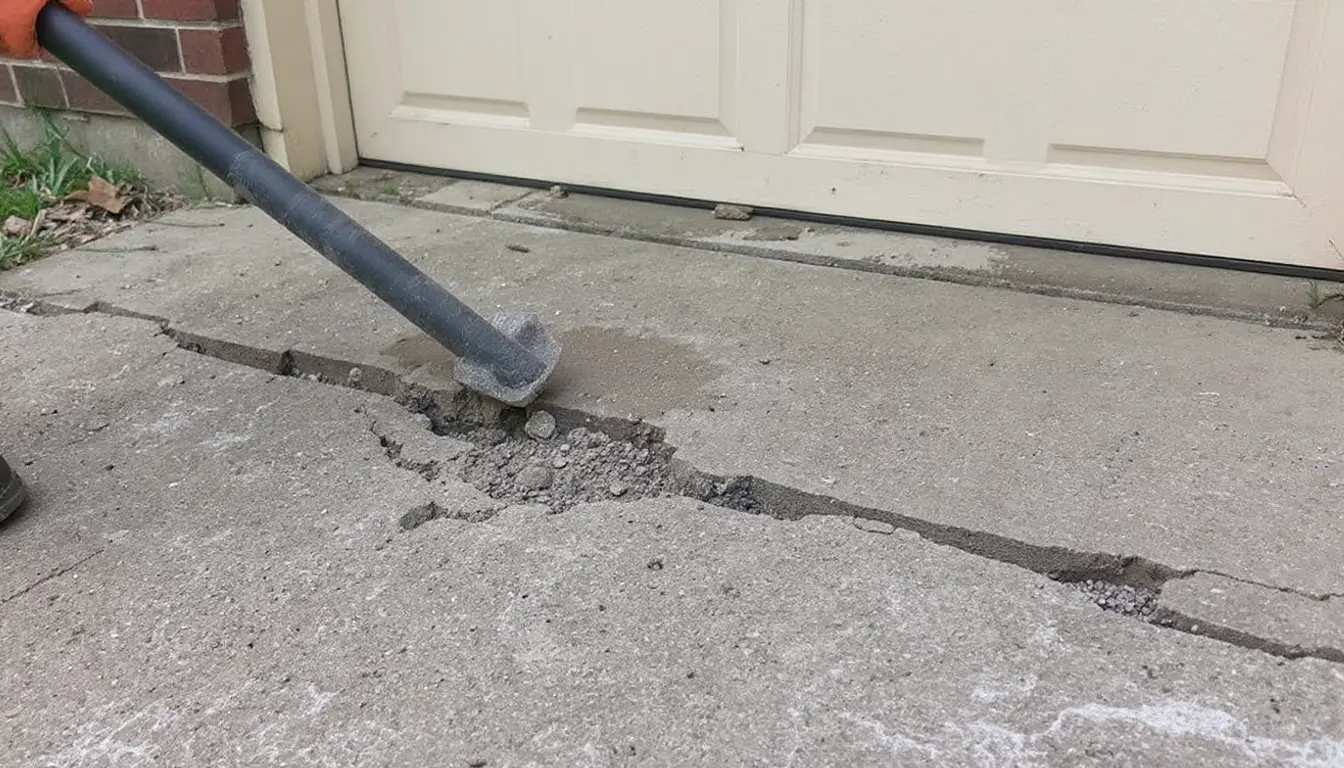
On a truck-loaded lot, the joints fail before the field does. A slab edge that's dropped below its neighbor — you feel the bump driving over it — means the load is no longer carrying across the joint, and every truck that hits it drives the two panels further apart. Left alone, the unsupported edges spall and the panels rock. So we start at the joints: which have faulted, which are pumping, and whether the corners have begun to delaminate under the repeated impact.
That read decides everything downstream. A joint that's faulted but sitting on sound base can be restored. A panel that's pumping water and fines has lost its substrate, and no joint treatment fixes a base that isn't there. We sound the suspect panels — dragging a chain or tapping for the hollow ring — before we quote a method. It's the same discipline we bring to the pads in nearby Grain Valley and Oak Grove.
Partial-depth where the base holds, full-depth where it's gone
Once we know which panels sit on sound ground, the method follows. Where the base is intact and only the surface or a joint edge has broken down, a partial-depth repair is right: we saw a clean square around the damage, remove to sound concrete, prepare the substrate to a proper profile, and bond new material that carries the load. No feather-edge — a patch tapered to nothing shears off under the first truck.
Where a panel is pumping, badly faulted, or cracked through, it needs a full-depth repair: remove the panel, rebuild and compact the base, and restore load transfer across the joints so the new slab shares its load with its neighbors the way the original was meant to. On Grundy clay under truck traffic, skipping the base rebuild just buys a repair that ruts again in a season.
The same clay that ruts the lots cracks the driveways
Odessa's homes — the pre-1960s places near the Square and the 1980s-2000s subdivisions off Old 40 Highway — sit on the same Grundy clay. On a driveway there's no truck load, but the clay still swells and shrinks with the seasons, and that movement opens cracks. The first question is whether a crack is active — still working with the wet-dry cycle — or dormant and safe to seal.
An active crack on soil this expansive keeps moving, so a rigid fill placed across it just cracks again alongside the repair. We read the edges for fresh movement and where the clay is in its cycle before we commit. For how these soils drive concrete throughout the region, our soil conditions guide lays out what to expect.
When an I-70 frontage lot reaches its rehab crossroads
The retail power centers along Odessa's I-70 frontage mostly date to the 1980s and 90s, which puts them at 20 to 30 years — the point where a lot stops being a patch-here-and-there job and reaches a real decision. We map the lot panel by panel: which slabs are sound and worth partial-depth repair, which surfaces have only scaled and can be resurfaced, and which have failed to the base and need replacement.
That map turns a vague "the lot's rough" into a phased plan with a number on each panel, so a property manager can budget the work over one or two seasons instead of tearing out concrete that still has years left. It's the honest version of a repair estimate — and the one that keeps a commercial lot open while it gets fixed. See our commercial concrete work for how we phase it.
Surface spalling and scaling through Odessa winters
Freeze-thaw and deicing salt work Odessa's exposed flatwork apart from the top down. Water gets into the surface, freezes, and lifts flakes — that's scaling — and where salt reaches shallow steel, the metal rusts and pushes the concrete off in sheets. NOAA's freeze-thaw record for this stretch of I-70, paired with a roughly 36-inch frost depth, tells you the surface takes a real seasonal beating.
Where the damage is surface-only, we repair to sound concrete and reseal for the climate. Where corrosion is driving the spall, we remove concrete behind the exposed reinforcement, treat the steel, and rebuild — because patching over rusting steel just breaks off again. A driveway that's flaking badly is covered in our repair-or-replace guide.
What an Odessa repair costs — and when replacing wins
We don't quote concrete repair by the square foot sight unseen, because the honest number depends on what we find when we sound the slab and read the joints. A faulted joint on sound base is one price; a pumping panel that needs the base rebuilt is another. What we can promise is a straight answer on which panels are worth saving and which aren't.
Repair is usually the smart money when the base is sound and the damage is contained. When corrosion runs through the reinforcement, the base has failed, or cracking has spread into a connected web across the field, replacement is the better value — and we'll put that line in writing rather than sell a repair that won't hold. Call (816) 721-1699 for a free estimate.
Ruts, faulted joints, or a spalling lot in Odessa?
From call to concrete — the fastest in KC.
We'll sound the slab, read the joints, and tell you which panels are worth repairing and which aren't — with the number on each. Straight answer, usually within 24 hours. Call (816) 721-1699.
Building Concrete Repair for Odessa conditions
Sound the slab and read the joints
Separate sound base from failed base
Match the method to the panel
Repair, seal, and put replacement in writing
Signs your Odessa Concrete Repair needs attention
A bump where two panels meet
Gray water pumping up at the cracks
Ruts forming in a truck lane
A driveway crack that reopens each year
A flaking, scaling surface on the lot
What sets Ford apart in Odessa
We fix the base, not the surface
On Grundy clay under I-70 truck loads, a lasting repair rebuilds the substrate and joints — a surface patch just ruts again next season.
We start at the joints
Faulted, pumping joints fail before the field does. We sound the panels and restore load transfer where the base still holds.
Partial-depth or full-depth, matched to the slab
Sound base gets a bonded partial-depth repair; a failed panel gets full-depth and a rebuilt base. We match method to what we find.
Rated 4.9 across the metro
KC-metro property owners give Ford Concrete 4.9 stars across 29 reviews for repairs built for the load and the clay.
The projects behind our name
From your driveway to an Amazon warehouse — the same crew, the same standards, every project.
Taco Bell
New Construction
Overland Park, KS
Domino's Pizza
New Construction
Independence, MO
Freddy's
New Construction
Kansas City
Tidal Wave Car Wash
New Construction
Kansas City
Amazon
New Construction
Riverside, MO
Nortian Food Grade Protein Facility
New Construction
Springfield, MO
Concrete Repair in Odessa — FAQs
Why do the joints on my commercial lot fail before the middle of the slab?
My driveway crack keeps coming back after I fill it — why?
Can you repair a rutted truck lane, or does the whole thing have to come out?
Do I need a permit to repair concrete in Odessa?
Is it worth repairing 25-year-old concrete on an I-70 frontage lot?
What else we build in Odessa
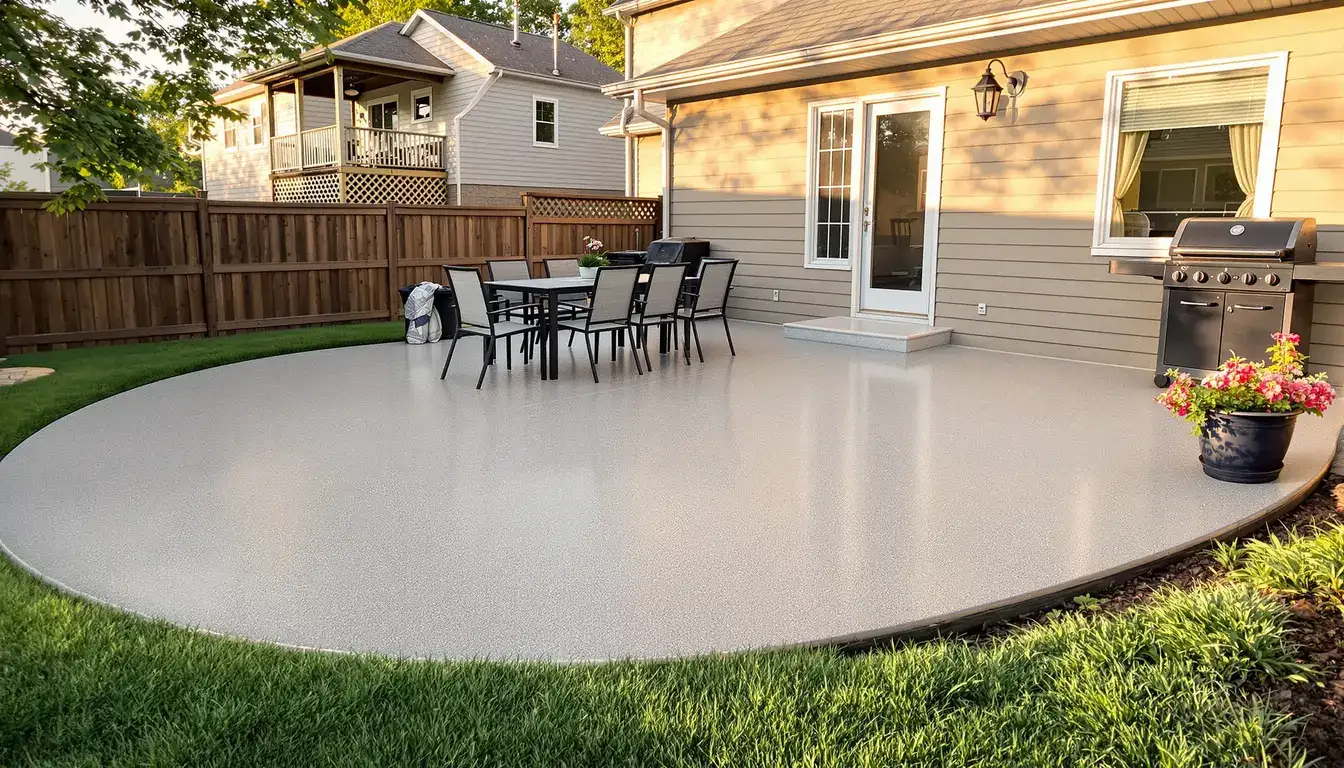
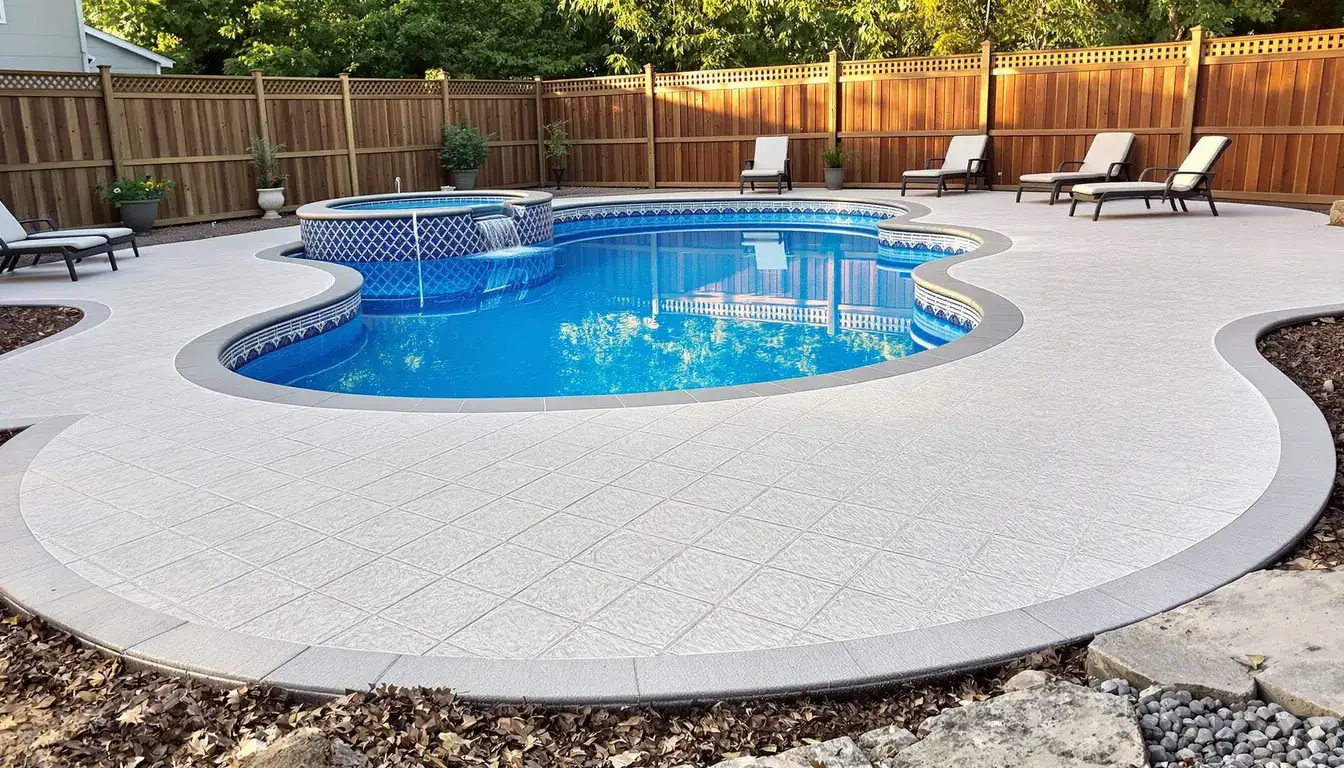
Serving Odessa and the surrounding metro
Get your Odessa project moving
From call to concrete — the fastest in KC.
Get a free, no-obligation estimate for your concrete project. We serve the entire Kansas City metro — call (816) 721-1699 or request your estimate online.