Warehouse & Industrial Floors Kansas City
Professional Warehouse Concrete Floor Installation Across Kansas City Metro
Warehouse & Industrial Floors in Kansas City
High-performance industrial concrete floor installation for warehouses, distribution centers, and manufacturing facilities.
Professional Warehouse Concrete Floor Installation Across Kansas City Metro
Industrial facilities throughout the Kansas City metro area demand concrete flooring systems engineered for heavy-duty performance. Ford Concrete Construction delivers specialized warehouse concrete floor contractor services in Kansas City, serving commercial properties from Jackson County's expansive clay terrain to Johnson County's clay-loam conditions. The unique soil characteristics across the metro—from Wymore series expansive clays to varying drainage conditions—require precision engineering for industrial concrete floor installations that withstand decades of heavy equipment traffic, freeze-thaw cycling, and operational demands.
Kansas City's industrial corridor spans multiple counties, each presenting distinct challenges for concrete slab contractors. Jackson County facilities face expansive clay soils that expand and contract with moisture changes, while Johnson County properties encounter different clay-loam compositions. The region's 34-36 inch frost depth and 35-40 annual freeze-thaw cycles demand specific concrete mix designs with proper air entrainment percentages—typically 5-8% for exterior applications and 4-7% for interior slabs—to prevent scaling and cracking during temperature fluctuations.
Heavy-Duty Industrial Concrete Floor Systems for Kansas City Warehouses
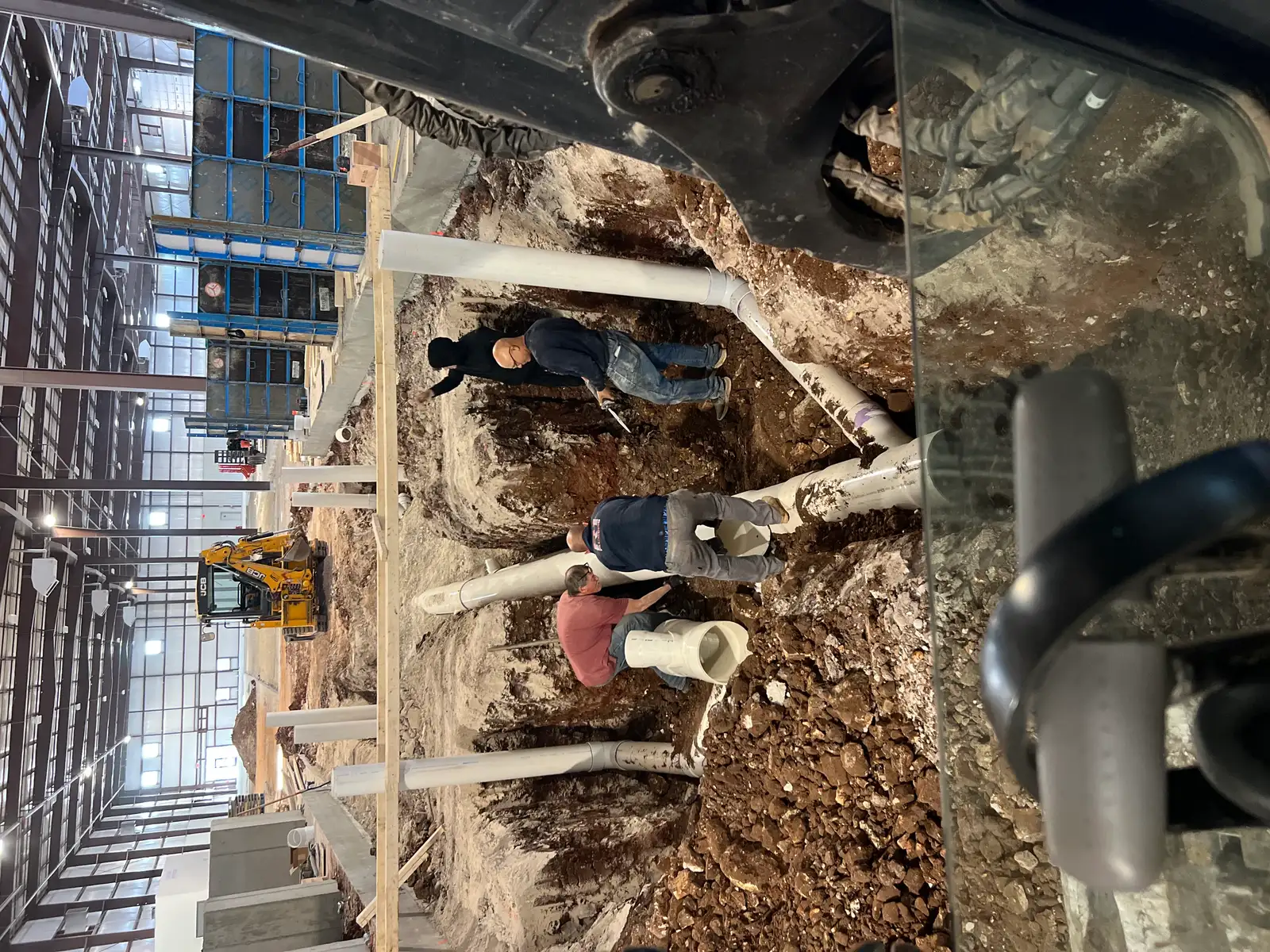
Modern warehouse operations require concrete flooring systems engineered for specific load requirements and traffic patterns. Ford Concrete Construction has installed industrial-grade concrete floors for major commercial clients including Amazon's Riverside facility, multiple Taco Bell locations in Overland Park, and Domino's distribution center in Independence. These projects demonstrate the technical expertise required for large-scale industrial concrete floor installations across the Kansas City metro's diverse geological conditions. Ford handles the full sequence — from site excavation and grading to the finished warehouse floor — on a single contract.
Warehouse concrete floors typically require 6-8 inch thickness for standard operations, with 10-12 inch sections for heavy machinery areas and loading docks. Concrete strength specifications range from 4,000 PSI for general warehouse areas to 5,000+ PSI for high-traffic zones. Joint spacing follows industry standards of 24-30 times the slab thickness, with control joints placed every 12-15 feet in each direction to manage shrinkage cracking. The metro's clay-heavy soils require proper subgrade preparation, often including 4-6 inches of compacted aggregate base to provide stable support and drainage.
Specialized Solutions for Kansas City's Challenging Soil Conditions
The Kansas City metro's predominant Wymore series expansive clay soils present unique challenges for warehouse concrete floor installations. These clay formations, particularly prevalent in Jackson, Clay, and Platte counties, can expand up to 10% when saturated and contract significantly during dry periods. Concrete slab contractors must account for this soil movement through proper subgrade preparation, including moisture barriers, aggregate bases, and strategic joint placement to accommodate differential movement.
Installation techniques vary based on specific metro locations. Facilities in Johnson County's clay-loam soils may require different approaches than those in Jackson County's heavy clay conditions. Wyandotte County industrial properties often encounter varying soil compositions within single project sites, demanding flexible engineering solutions. The region's rolling to flat terrain affects drainage patterns, requiring careful attention to floor elevation, slope design for proper drainage, and integration with existing site grading systems. Large warehouse projects also require engineered commercial foundation systems — spread footings, grade beams, and mat slabs designed for the building's structural loads and Kansas City's clay soils.
Advanced Concrete Mix Designs for Kansas City Industrial Applications
Industrial concrete floor performance depends heavily on proper mix design tailored to Kansas City's climate conditions. The metro's 39-42 inches annual precipitation and temperature variations demand concrete formulations that resist moisture penetration, freeze-thaw damage, and chemical exposure from industrial operations. Mix designs typically incorporate supplementary cementitious materials like fly ash or silica fume to enhance durability and reduce permeability.
Air entrainment becomes critical for Kansas City warehouse floors, particularly those with exterior exposure or unheated areas. Proper air content—maintained between 5-8% for exterior applications—creates microscopic air bubbles that provide space for freezing water to expand without damaging the concrete matrix. This protection proves essential during the metro's 35-40 annual freeze-thaw cycles, preventing surface scaling and extending floor service life beyond 30 years with proper maintenance.
Comprehensive Warehouse Floor Installation Process
Successful industrial concrete floor installation requires systematic approaches adapted to each facility's operational requirements and site conditions. Projects begin with comprehensive soil analysis and structural engineering specific to the property's location within the Kansas City metro. Jackson County installations may require additional soil stabilization measures compared to Johnson County projects due to differing clay compositions and drainage characteristics.
The installation process integrates multiple specialized services, including existing concrete removal when replacing deteriorated floors, precise forming and pouring techniques for large-scale installations, and coordination with facility operations to minimize disruption. Post-installation services include comprehensive crack repair solutions and preventive maintenance programs designed for the metro's challenging environmental conditions.
Ready to Install Your Industrial Concrete Floor?
From call to concrete — the fastest in KC.
Get a detailed assessment and custom proposal for your Kansas City warehouse flooring project. Ford Concrete Construction brings proven expertise from major commercial installations across the metro area.
How We Handle Warehouse & Industrial Floors in Kansas City
Site Assessment and Soil Analysis
Comprehensive evaluation of existing conditions, soil testing to determine clay content and expansion characteristics, and structural assessment of subgrade conditions specific to Kansas City metro soil types.
Engineering and Design Development
Custom floor design based on load requirements, traffic patterns, and local conditions, including thickness specifications (6-12 inches), reinforcement placement, and joint layout every 12-15 feet for optimal performance.
Subgrade Preparation and Stabilization
Excavation to proper depth, soil stabilization for expansive clays, installation of 4-6 inch aggregate base, and moisture barrier placement to prevent subgrade movement and moisture infiltration.
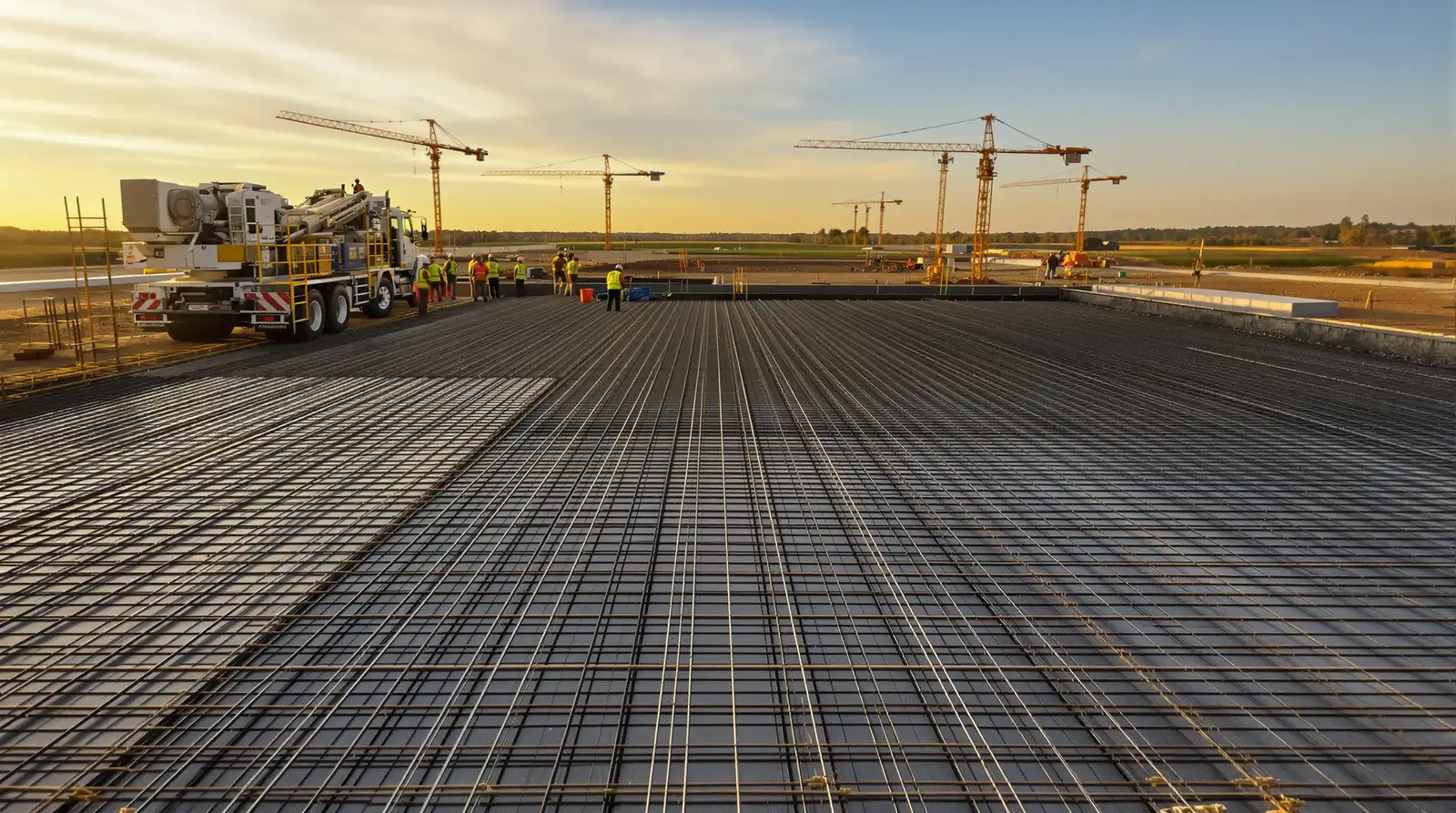
Forming and Reinforcement Installation
Precision forming systems for accurate elevation control, placement of reinforcing steel or fiber mesh as specified, and preparation for concrete placement with proper grade establishment and joint preparation.
Concrete Placement and Finishing
Placement of engineered concrete mix (4,000-5,000+ PSI) with proper air entrainment (5-8%), systematic placement techniques for large areas, and professional finishing for specified surface texture and durability.
Joint Installation and Curing
Saw-cut control joints within 24 hours of placement, installation of joint sealants and load transfer devices, and implementation of proper curing procedures for Kansas City's climate conditions.
Final Inspection and Documentation
Comprehensive quality control inspection, thickness verification, strength testing documentation, and delivery of maintenance recommendations specific to warehouse operations and metro environmental conditions.
Signs You Need Warehouse & Industrial Floors
Floor Cracking and Settlement
Visible cracks, uneven surfaces, or settling areas indicating subgrade movement, particularly common in Kansas City's expansive clay soils during seasonal moisture changes.
Surface Scaling and Spalling
Concrete surface deterioration, flaking, or pop-outs caused by freeze-thaw damage, inadequate air entrainment, or poor concrete quality, especially problematic during metro's harsh winter conditions.
Joint Failure and Separation
Deteriorated control joints, separation gaps, or failed sealants allowing moisture infiltration and creating trip hazards, often accelerated by improper joint spacing or placement.
Load-Bearing Inadequacy
Floor deflection, cracking under equipment loads, or structural concerns indicating insufficient thickness, reinforcement, or concrete strength for current warehouse operations and equipment.
Drainage and Moisture Issues
Standing water, poor drainage, or moisture-related problems affecting operations and floor integrity, particularly challenging in Kansas City's clay soil conditions with varying drainage characteristics.
Surface Wear and Dusting
Excessive surface wear, dusting, or abrasion from forklift traffic and operations, indicating inadequate surface hardness or durability for industrial use requirements.
Why Kansas City Chooses Ford Concrete
Metro-Wide Commercial Experience
Proven track record installing warehouse floors for major brands across Kansas City metro, including Amazon's Riverside facility, Taco Bell locations in Overland Park, and Domino's Independence distribution center, demonstrating capability for large-scale industrial projects.
Local Soil Expertise
Deep understanding of Kansas City's diverse soil conditions, from Jackson County's expansive Wymore series clays to Johnson County's clay-loam compositions, ensuring proper subgrade preparation and long-term floor stability across all metro locations.
Climate-Adapted Engineering
Concrete mix designs specifically engineered for Kansas City's 34-36 inch frost depth, 35-40 annual freeze-thaw cycles, and 39-42 inches annual precipitation, with proper air entrainment and durability additives for decades of performance.
Heavy-Duty Specifications
Industrial-grade concrete installations ranging from 4,000-5,000+ PSI strength specifications, with thickness designs from 6-12 inches based on load requirements, joint placement every 12-15 feet, and proper reinforcement for warehouse operations.
Trusted by National Brands
From your driveway to an Amazon warehouse — the same crew, the same standards, every project.
Taco Bell
New Construction
Overland Park, KS
Domino's Pizza
New Construction
Independence, MO
Freddy's
New Construction
Kansas City
Tidal Wave Car Wash
New Construction
Kansas City
Amazon
New Construction
Riverside, MO
Nortian Food Grade Protein Facility
New Construction
Springfield, MO
Get Your Free Warehouse & Industrial Floors Estimate in Kansas City
Or call us directly: (816) 721-1699
Warehouse & Industrial Floors in Kansas City — FAQs
What concrete thickness is required for warehouse floors in Kansas City?
How do Kansas City's soil conditions affect warehouse floor installation?
What concrete strength (PSI) is needed for industrial warehouse floors?
How are control joints spaced in warehouse concrete floors?
What preparation is required for Kansas City warehouse floor installations?
How long before warehouse operations can resume after concrete floor installation?
Ready to Get Started?
From call to concrete — the fastest in KC.
Get a free, no-obligation estimate for your concrete project. We serve the entire Kansas City metro — call (816) 721-1699 or request your estimate online.